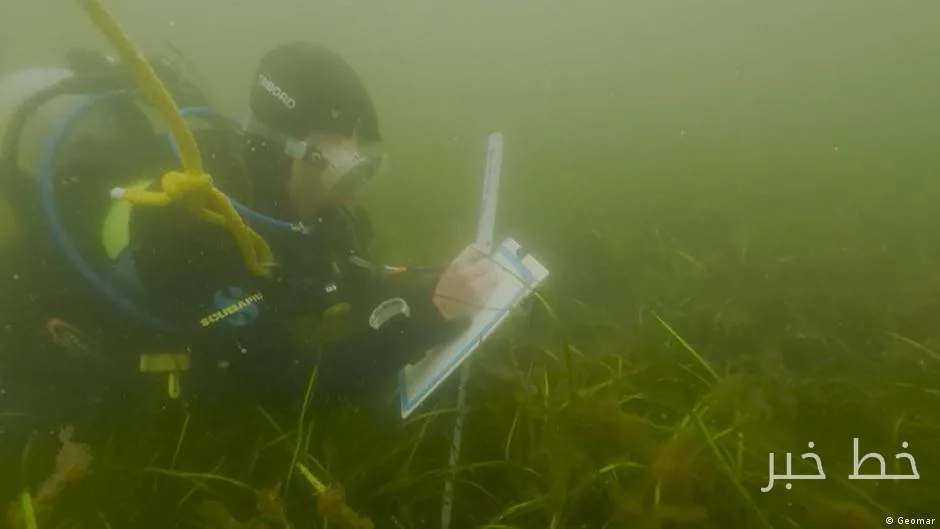
Seagrass meadows on the Baltic coast have been severely damaged, and environmental experts are working to restore these valuable habitats. In this regard, a group of divers in the cold waters of the Baltic near the small town of Dahme in northern Germany are collecting seagrass seedlings. They carefully preserve the roots and harvest a few seedlings from each location to plant in new sites where they hope to restore another meadow.
The Importance of Seagrass Meadows
Experts estimate that about 60 percent of the seagrass meadows on the Baltic coast have disappeared. "This is bad news," says marine ecologist Torsten Reusch from the GEOMAR Helmholtz Centre for Ocean Research Kiel. "The good news is that the decline has now stopped."
Read more: The death of an iconic elephant in Sri Lanka raised concerns about habitats
Seagrass meadows provide food and shelter for fish, crabs, shellfish, and many other species. They improve water quality, slow down waves, and protect coastlines from erosion. Additionally, they store carbon in the seabed 30 to 50 times faster than forests.
Efforts to Restore Meadows
While countries are working to restore seagrass meadows, Reinhard Helbig from the startup Zostera Tech is trying to make this process easier. He helps restore marine habitats, including seagrass meadows damaged by marine activities such as wind farm construction. He says, "Stormy weather helps us. Waves and currents displace seagrass from the seabed, and a few days later, they wash ashore here."
The collected seedlings are grown and propagated at Zostera Tech's aquaculture facility. A few months later, the seagrass seedlings are placed on a planting base, and a special machine connects the planted strands with biodegradable thread. These lengths can be placed on the seabed with less diving work.
At the GEOMAR Centre in Kiel, researchers are also testing new methods for restoring seagrass meadows in larger areas, including the use of seeds. Marine ecologist Astrid Thomsen reaches into an aquarium and pulls out a pot containing a seagrass plant. She says, "Ten percent of the plants in our meadows produce seeds. You can clearly see the seeds inside the seed capsule."
Reusch also points out that the best method for growing meadows that can withstand climate change appears to be planting individual seedlings as a base and then scattering seeds between them to increase genetic diversity.
The success of a planting mission becomes evident several months or even years later. Thomsen and her colleagues visit the first seagrass meadow that was planted in the Baltic waters of Germany in 2021. Divers count the seedlings and check how densely they have grown and document the development of the meadow. They then compare it with the donor meadow that supplied the plants.
Thomsen says, "We examined the seagrass meadow, and it is really dense. We counted a lot of seedlings per square meter. Everything is going well."
Read more: Millions still use polluted waters · Increase in greenhouse gas emissions and global temperatures is a result of Trump's policies