The European Court of Human Rights announced on Tuesday that member states of the Council of Europe have the right to control the entry of foreign nationals. However, the court emphasized that all 46 member countries of this group, which includes all EU countries and some non-member states, must uphold and respect the human rights of individuals even in difficult situations.
The Court's Complex Ruling on Migrants
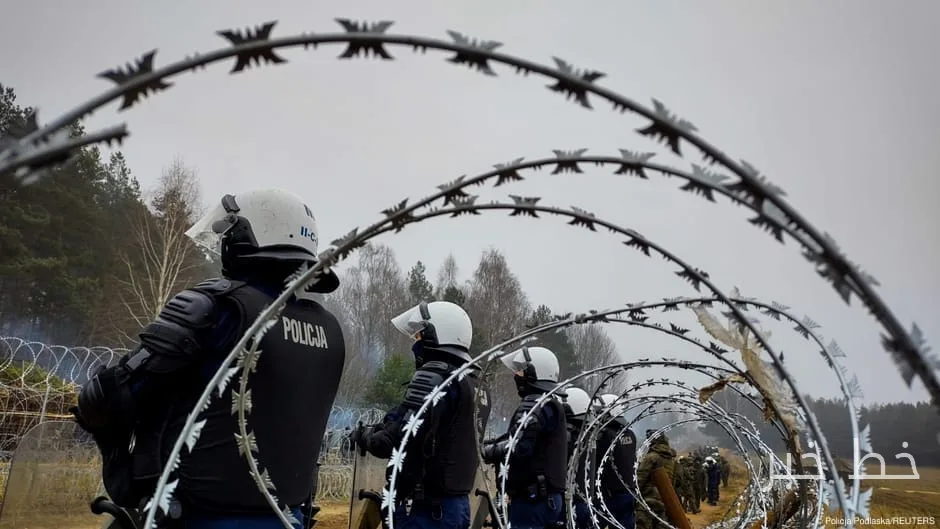
The ruling of the European Court of Human Rights addresses the entry of nationals from Afghanistan, Iraq, and Cuba into EU member states including Poland, Latvia, and Lithuania in 2021 and 2022. During this period, tensions arose at the eastern borders of the EU, with Belarus being the main accused in creating the migration crisis.
Read more: Emmanuel Macron in a strong position for EU budget negotiations
Belarus was directing individuals from various countries to its territory and then to the EU borders. The European Court stated in its ruling that governments have the right to control the entry of foreign nationals into their territory even when migration is used as a political tool.
The Necessity of Protecting Migrant Rights
The court described Belarus's hostile actions in 2021 as an example of "instrumentalizing migration." However, the court emphasized that governments must ensure that migrants are protected from inhumane or degrading treatment.
In this context, national authorities are obliged to identify individuals at severe risk and provide them with support. The migrants involved in this case claimed that they were violently prevented from entering the EU and that their asylum requests were not processed, which constituted a violation of their human rights.
The court stated in its announcement that "in situations where migration is instrumentalized, the expulsion of a foreign national to the country using migration will not, by itself, constitute a violation of Article 3 (prohibition of torture and inhumane or degrading treatment)." Additionally, the court ordered Poland, Latvia, and Lithuania to pay compensation for their treatment of migrants at the EU's external borders with Belarus.
In this regard, five EU countries also announced last week a plan with Rwanda to establish a return center in this African country. This center is set to host unsuccessful asylum seekers awaiting return to their home countries. However, there are concerns about this project, as Rwanda has a low human rights score and questions about the protection of individuals' rights have been raised.