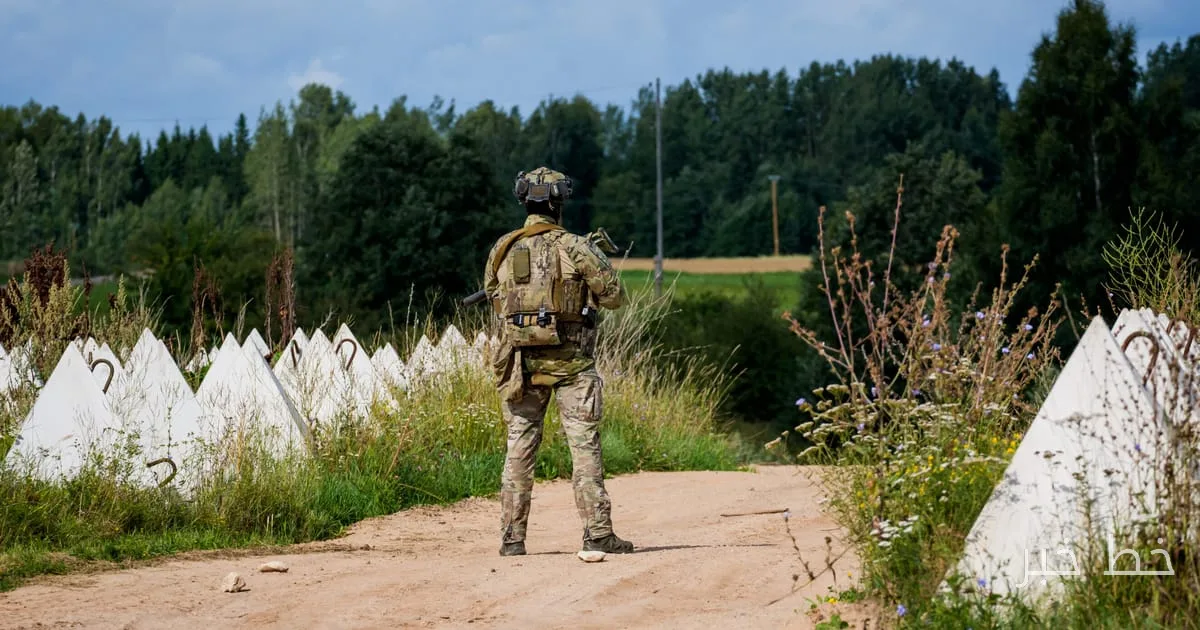
European leaders are deeply concerned that Russia may carry out drone or missile attacks against NATO countries as Moscow increases its hybrid campaigns across the continent. These concerns have intensified following multiple violations of NATO airspace by Russia and an increase in cyberattacks.
Readiness of European Countries
Germany is preparing hospitals for the possibility of conflict, and Lithuania has updated its evacuation plans. Additionally, NATO forces are conducting exercises in the Baltic region, and Belarusian forces have also held large maneuvers near Lithuania. These developments follow an increase in Russian missile and drone attacks on Ukrainian cities and targeting areas close to Poland.
Read more: Canada and the European Union Seek Special Membership for Greater Cooperation
The Polish government has also warned of potential threats from Moscow. Donald Tusk, the Prime Minister of Poland, said on Thursday that Russia may send drones or missiles to the territories of NATO countries supporting Ukraine in the coming months.
Emergency Meeting of European Leaders
Emmanuel Macron, the President of France, held an emergency meeting with party leaders and presidential candidates for 2027 to discuss Ukraine, Iran, and the growing energy crisis. He described Tusk's warnings as "valid and substantiated" and announced a new plan to protect critical infrastructure. Macron also stated that the hybrid threat from Russia against Europeans and France has intensified.
Guillaume Lacroix, leader of the Left Radical Party, said after the meeting: "At 50 years old, I have rarely felt such a sense of dizziness." Mark Rutte, the Prime Minister of the Netherlands, also said on Friday that this warning must be taken very seriously, and we must show that we do not accept this behavior and will act if necessary.
On Thursday, Alexander Stubb, the President of Finland, told his country to be prepared for the potential occurrence of incidents including sabotage and Russian drones. Moscow has also ramped up its warlike rhetoric ahead of its legal elections this weekend, where the United Russia party led by Vladimir Putin is expected to remain in power.
Sergey Lavrov, the Russian Foreign Minister, warned Europe this week that if NATO allies attack the country, they will face a "very short" war. A senior European defense official stated: "Russia has intensified its activities, and we must remain vigilant. This may be a sign of a broader trend."
However, it remains unclear whether the recent warnings are based on new intelligence. Lithuanian Foreign Minister, Kęstutis Budrys, said that Vilnius has "the same information" regarding the possibility of false flag operations, but noted that this information dates back to July.
Two NATO diplomats said that allies have not been officially informed of any new intelligence in NATO and that NATO has not changed its threat assessment so far. A NATO official stated: "At this time, we do not see an immediate threat of an attack."
Ed Arnold, a former NATO official and advisor at D Group, said that the warnings could also be aimed at raising public awareness about threats and preventing false flag attacks before they occur.
A senior NATO military official said that Russia may have resorted to this behavior due to its difficulties in defeating Ukraine. This official added: "It may mistakenly believe that the only way out of this situation is to escalate its hybrid campaign, which is a losing proposition, as we are prepared to respond."
According to reports, between January and August, 100 hybrid incidents were officially recorded across Europe, compared to 60 incidents during the same period last year. A senior NATO official stated that the actual number is "easily over 200" and does not include cyberattacks that occur monthly against NATO headquarters in Brussels.
Read more: Mark Carney Addresses Members of the European Parliament on Canada's Associated Membership · Increase in Russian Birth Tourism to Brazil