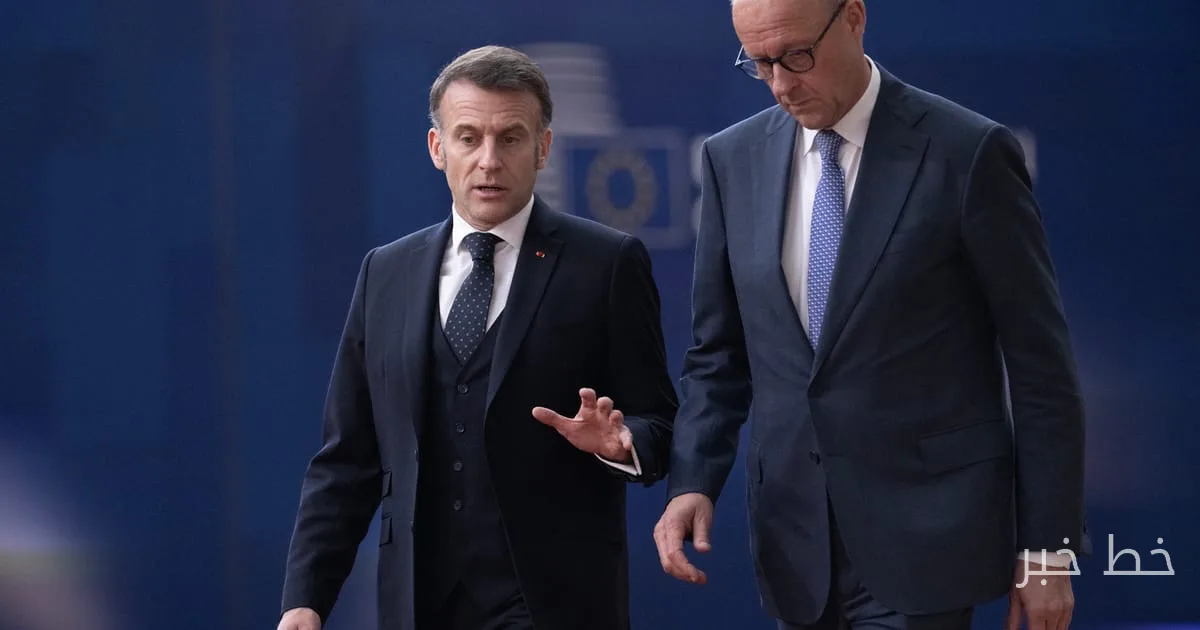
France and Germany announced on Wednesday that they will release the diesel reserves that were previously committed in March as part of the G7 group's commitment to use oil reserves. This has created uncertainty about whether new shipments of diesel will also be released.
Details of G7 Commitments
The Group of Seven wealthy nations committed on Friday to release a "significant" amount of diesel in the next 20 days to lower global prices. This decision came after threats from Trump administration officials to impose a fuel export ban if European countries did not release reserves.
However, in a private meeting on Wednesday, European countries acknowledged that the diesel release would not include new shipments, and instead, shipments that were previously committed under a broader commitment to release 100 million barrels of oil would be released. This agreement was mediated by the International Energy Agency in March following the onset of the war in Iran.
Amount of Diesel Released and Criticism
The exact amount of diesel that France and Germany will release is still unclear, but it will be part of the remaining reserves committed in March. So far, Germany has only released 600,000 tons of a total of 2.65 million tons of oil, diesel, and jet fuel to the market. It is also unclear how much of its commitment to release 14.6 million barrels of oil France has fulfilled. However, Paris has unofficially stated that 8 million barrels remain under the March commitment.
France and Germany, which have the largest refined petroleum product reserves in Europe, have faced criticism from the Trump administration for not fully cooperating with their commitments. Germany has attributed this to weak demand for shipments.
Whether European countries will ultimately decide to commit to new shipments remains uncertain. An EU official stated on Monday that the new commitment "necessarily" refers to new releases. An extraordinary meeting of the International Energy Agency will be held today.
This action comes as other member countries have raised ambiguities about who has committed to what amounts and when. Some Eastern European countries, such as Bulgaria, have also expressed concerns that releasing reserves to combat prices would leave them vulnerable in the event of a supply crisis.
A spokesperson for Germany's Ministry of Economy and Energy confirmed on Tuesday that Berlin will not release any new barrels. He also stated that "the G7 has asked the International Energy Agency to monitor the rapid and complete implementation of commitments made for March 2026. Accordingly, based on previously made commitments, requirements must be met through the coordinated release of 100 million barrels through the International Energy Agency."
He added: "Currently, no additional amounts" will be released.