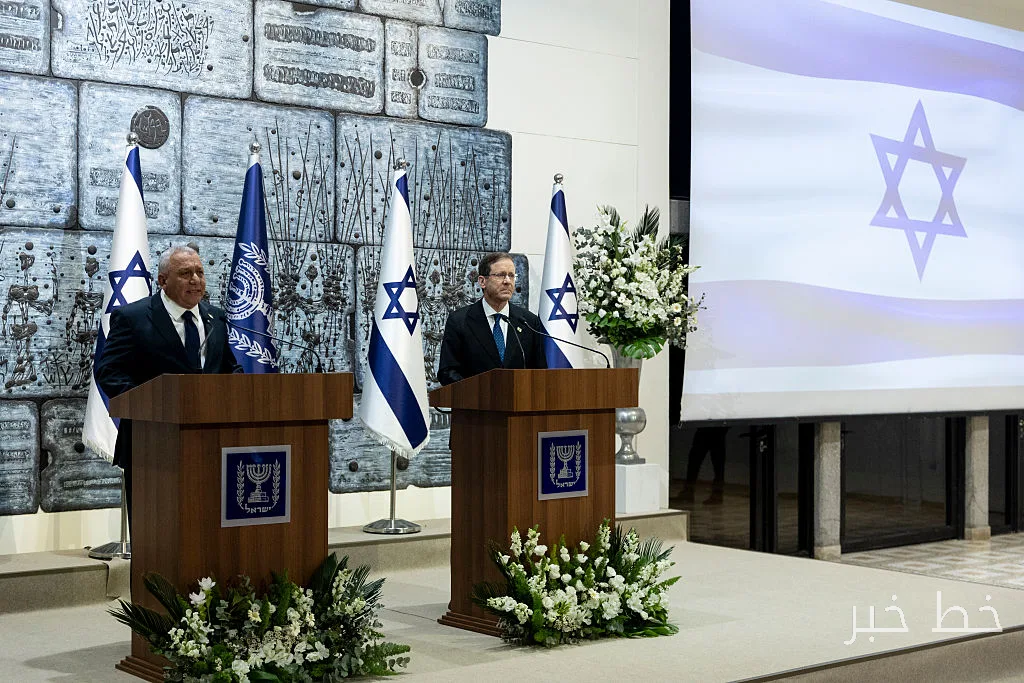
Gadi Eisenkot, former Chief of Staff of the Israel Defense Forces and leader of the right-wing Yashar party, has recently been appointed by Isaac Herzog, the President of Israel, to form a new government. This appointment is the first step in the process of determining the next Prime Minister of Israel, but this process may take months and give Netanyahu the opportunity to remain in power.
Government Formation Process
After Eisenkot's appointment, he has 28 days until December 6 to form a government that can gain the confidence of the Knesset, Israel's parliament. Following the announcement of the government formation, representatives must hold a session for a confidence vote within seven days. If successful in this vote, the new government will begin its work.
Read more: Death of a police officer in Oviedo, Spain after an explosion in a local dispute
In last month's elections, no party bloc was able to secure the 61 seats necessary to form a majority in the 120-member parliament. This means that the future leadership situation remains uncertain and the government formation process is ongoing.
Challenges Ahead
Benjamin Netanyahu, despite low public satisfaction ratings, has secured the most votes with his Likud party and right-wing allies, such as the Otzma Yehudit party, winning 53 seats. In contrast, the four Jewish parties supporting Eisenkot, including the Yashar, Be'ehad, Democrats, and Yisrael Beiteinu parties, have won 48 seats, while two Arab-centered parties hold 19 seats, marking a new record.
To form a government, parties must reach an agreement that can garner enough support for a confidence vote in the Knesset. Typically, this requires obtaining 61 seats, but this number may decrease if some parties abstain.
Eisenkot may seek support from Arab-centered parties, while Netanyahu is likely to pursue ways to maintain his power. In the past, Netanyahu has made proposals to share the premiership with other rivals.
The election results may also change the control of the parliament before the new government is formed. Shira Efron, a senior researcher at RAND, announced that the opposition bloc has agreed to appoint Matan Kahana from the Yashar party as the Knesset Speaker and Avigdor Lieberman from Yisrael Beiteinu as the Chairman of the Foreign Affairs and Defense Committee. This event reflects a clear vision for the parliament and demonstrates a willingness to get to work.
President Herzog made the decision to appoint Eisenkot based on consultations with political party leaders. He concluded that although Netanyahu has the most votes, Eisenkot has a better chance of forming the necessary coalition. This indicates that a majority of Israelis voted for parties opposing Netanyahu.
However, the support of 67 Knesset members for Eisenkot does not guarantee ease in forming a government, and there are many challenges ahead.
Read more: New trilateral talks on the Ukraine war to be held in Abu Dhabi · Experts call for transparency and control over government use of artificial intelligence