Generation Z protests in Germany, following violent scenes, resulted in disagreements within the federal government regarding existing responsibilities. While everyone agrees on the need to hold accountable those who engaged in violence, some conservative politicians have primarily blamed immigrant groups, raising questions about identifying problems or reinforcing prejudices.
Reactions to the Violence and Analyses
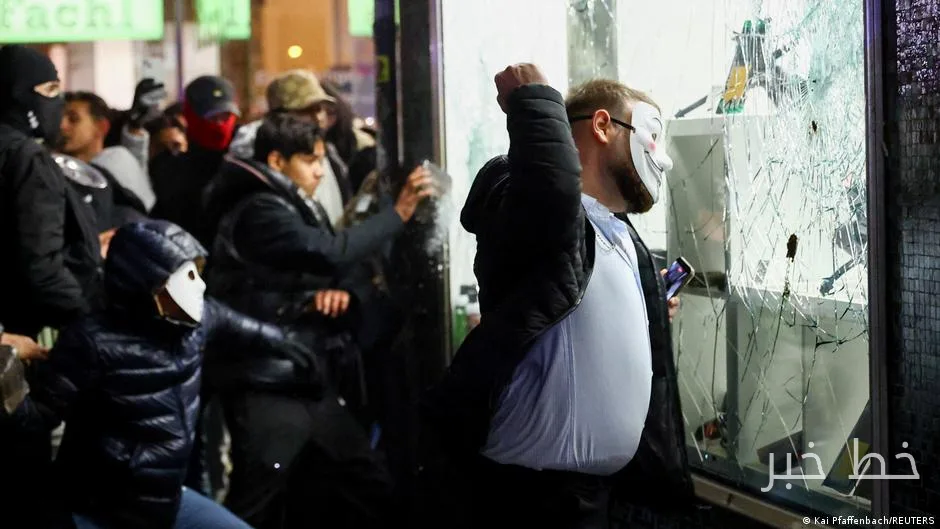
In Frankfurt, over 100 police officers were injured in street clashes that occurred after the protests on Saturday (October 31), with one of them severely injured. Additionally, shops were damaged and looted. The situation in Cologne, Hamburg, and Berlin also escalated similarly.
Read more: Iran's Response to JD Vance's Letter Insisting on Seven Conditions
Initially, tens of thousands of young people across Germany participated in largely peaceful gatherings. The initiative Gen Z regelt — meaning "Generation Z is managing" — called on young people to express their concerns about the future and demand better educational opportunities, affordable housing, and more action on climate change.
Disagreement within the Federal Government
Alexander Dobrindt, Germany's Interior Minister, and Roman Posek, the Interior Minister of Hesse where Frankfurt is located, quickly emphasized the tone of accountability. Posek (CDU) stated that most of those arrested were German citizens but added, "This group of criminals primarily came from immigrant backgrounds." Dobrindt, from the CSU party, remarked, "The peaceful protests were hijacked by leftist groups and immigrant thugs."
Chancellor Friedrich Merz (CDU) also supported the Interior Minister's statements and considered his assessment of the criminals' backgrounds based on "observations from investigative officials and emergency personnel on the scene." He announced a tough approach towards the rioters, stating, "Violence has no place on our streets, and my government will not tolerate it in this regard."
The Social Democratic Party (SPD), which is in a coalition government with the CDU and CSU, emphasizes that criminals were involved. Boris Pistorius, the Defense Minister (SPD), told the media, "It is the criminals who attack the police and cause harm, inflicting serious damage to property."
However, this is where the similarities end. Pistorius challenged the Interior Minister's choice of words, asking, "Who are the immigrant groups? Does this include third-generation individuals living in Germany who are German citizens?" He also stressed that this distinction could lead to misunderstandings.
Natalie Pawlik, the Federal Government's Integration Commissioner and SPD politician, further stated, "Attributing these violent riots to immigrant environments is overly simplistic." She also added that if investigations show that specific groups were involved in these events, the root causes must also be identified.
Karsten Prien, the Minister for Family and Education in Germany (CDU), also called for an examination of the causes of violent behaviors, stating, "Inciting tensions would also be politically incorrect." He emphasized that if the perpetrators are from immigrant backgrounds, it should concern us.
According to statistics from the Federal Statistical Office of Germany (Destatis), about 31% of Germany's population has an immigrant background, with this ratio being higher in many large cities. In Frankfurt, this figure exceeds 50%.
Read more: Trump Faces Congress Over Pentagon Leadership · Generation Z Protests in Germany Fuel Debate on Integration and Prejudice