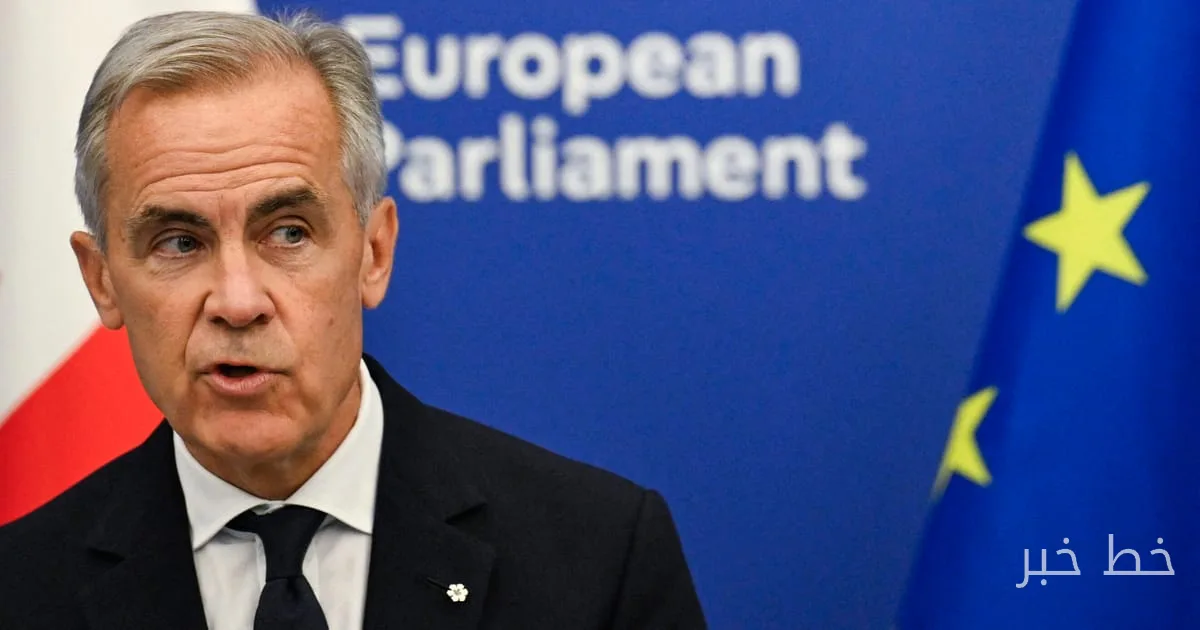
Germany, France, and at least six other European Union countries have objected to the term 'Associated Membership' for establishing closer ties with Canada. Six diplomats involved in the negotiations stated that these objections pertain to the term 'Associated Membership' and not to the overall goal of strengthening relations.
History of the Associated Membership Proposal
Five weeks after Ursula von der Leyen, President of the European Commission, first proposed that Canada be recognized as an 'Associated Member' of the European Union, this issue has become a political challenge. This proposal was raised in her State of the Union address and surprised both sides, namely Ottawa and European capitals. As the summit approaches, the disputes indicate that this term remains a political and communicative barrier.
Read more: Alice Weidel calls for swift negotiations on Ukraine and a return to cheap Russian energy
Bernd Lange, Chair of the European Parliament's Trade Committee, stated that the European Union is keen to collaborate closely with Canada. However, he also avoids using the term 'Associated Membership' as it could be confused with other forms of EU cooperation, such as cooperation agreements.
Concerns About Naming
Germany is vigorously working to remove this name from the draft statement, and France, Italy, and Belgium have also expressed doubts in this regard. The main concern of the opposing countries is that the European Union is naming the relationship before agreeing on its meaning. They believe that the definition of the name should have been clarified before negotiations with Canada began. Some diplomats have said that these countries are upset that von der Leyen proposed this name without consulting national governments.
One diplomat said, 'We have definitely put the cart before the horse.' He pointed out that we are announcing something and then determining how to implement it.
A representative from Germany's permanent representation to the European Union also refrained from commenting on this matter.
Future Collaborations and Goals
The European Commission intends to work with hesitant capitals and focus on acceptable language. An EU official stated that they believe the doubts of the opposing countries stem from a lack of precise understanding of the meaning of this proposal in concrete terms.
There is no disagreement regarding the goal of strengthening closer relations, which includes economic and defense cooperation, international interactions, and institutional ties. This official emphasized, 'What matters are the actions we take, not the name we choose for it.'
The aim of this naming is to describe the relationship between the European Union and Canada as closer than other collaborations the Union has with other countries, without Canada becoming a formal member of the Union. This is because the founding documents of the European Union limit this status geographically to the continent of Europe.
This distinction is important because existing arrangements with European neighbors, including the UK and Switzerland, are primarily focused on access to the EU's internal market. While Canada, as a country on another continent, does not request a similar model.
The idea is to first identify practical areas of cooperation and then decide whether new agreements or formal negotiations are needed.
Work on six priority areas will begin after the summit, and progress will be reviewed after six months, followed by a real assessment a year later at the next EU-Canada summit, which will be held in Europe.
This assessment will include whether Canada has come closer to the Union by fully participating in the Horizon Europe and Erasmus programs, establishing undersea cables, and storing critical raw materials with the EU. If Canada meets these conditions, it may be recognized as the first associated member of the European Union.
This diplomat described the idea as an experiment, adding that 'Canada may be the only country to achieve this title.'
This program reflects a shift in calculations on both sides. Canada has long been dependent on trade with the United States, but tariffs and political pressures from Washington have heightened concerns about this dependency. Prime Minister Mark Carney wants to diversify trade and modernize the country's infrastructure, including energy communications that primarily go north and south.
For the European Union, a closer partnership with Canada is part of a broader effort to build relationships as pressure from the United States, China, and Russia increases. This summit is designed to create a distinct political framework for this partnership.
The statement is still under review and EU ambassadors are set to discuss it again on Monday. One EU official warned that several sections of the statement still have remaining comments.
Another controversial element pertains to energy cooperation, with Austria resisting any mention of deepening nuclear relations, while France, Romania, Slovakia, and some other countries support its inclusion.
Read more: Bulgarian presidential elections affected by security concerns in the Black Sea · Canadian diplomats barred from interacting with midterm election candidates in the U.S.