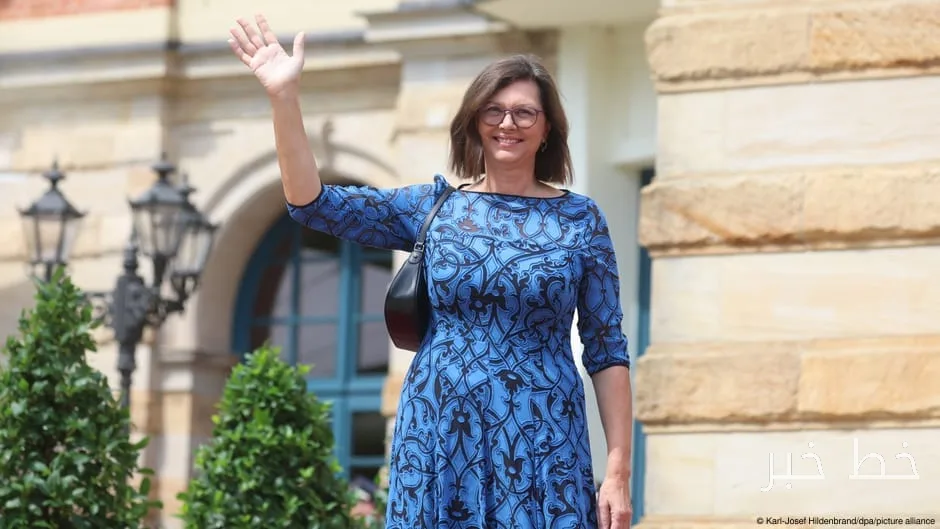
Ilse Aigner has been introduced as the candidate for the presidency of Germany by the Christian Democratic Union (CDU). This news was confirmed on Monday, and Aigner, who is 61 years old, has a high chance of being accepted for this largely ceremonial position. A special committee responsible for electing the President of Germany will be formed in late January.
Support from Various Parties for Aigner
Aigner particularly enjoys the support of her sister party, the CSU, which is based in Bavaria. Additionally, allied social democratic parties have announced that they will support her candidacy if the conservatives agree on it. This support indicates that Aigner could have a good chance of being elected as the first female President of Germany.
Read more: Marine Le Pen delays meeting with Nigel Farage in Paris
Aigner's Political Background
Ilse Aigner is currently the President of the Bavarian State Parliament, and her political background dates back to 1994. She initially began her career as a representative in the Bavarian State Parliament and then moved to the Federal Parliament of Germany (Bundestag) in 1998. Aigner also served as the Federal Minister of Agriculture under Angela Merkel for five years. She has been serving as the President of the Bavarian State Parliament since 2018.
Aigner, the daughter of an electrician and the youngest sister in her family, worked in the family business during her teenage and young adult years. She is a Roman Catholic and has no children. Given her extensive experience and the support she has received, Aigner is recognized as a strong candidate in the German political scene.
The German government is currently led by Chancellor Friedrich Merz, who also seems to support Aigner's candidacy. Merz has repeatedly spoken about the necessity of selecting a female candidate for the presidency. This reflects the cultural and social changes in Germany that gradually emphasize the role of women in politics.
The presidential election in Germany will be held soon, and Aigner hopes to be elected as the President of Germany with the support of various parties and coalitions. Currently, the incumbent president, Frank-Walter Steinmeier, will complete his second five-year term in March next year.