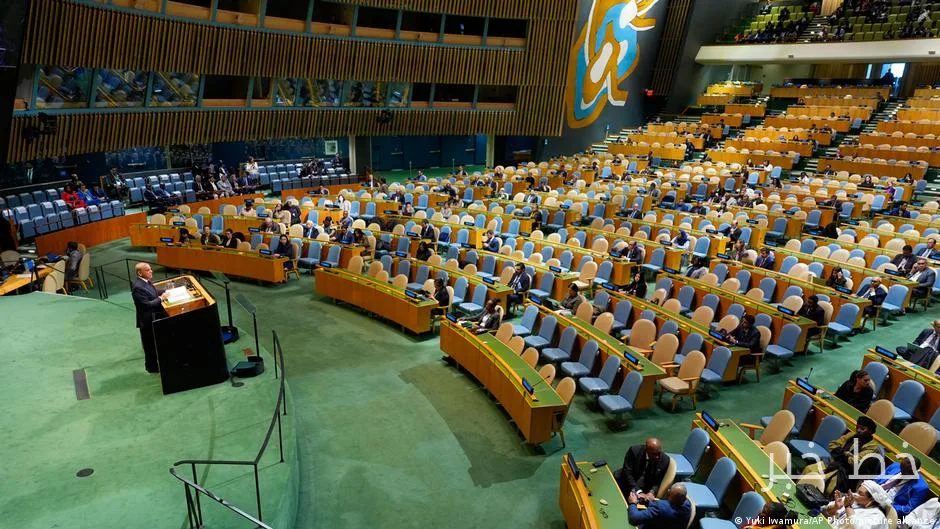
India and Pakistan exchanged accusations at the United Nations General Assembly on Friday. The Prime Minister of Pakistan, Shehbaz Sharif, criticized India's stance on Kashmir and spoke about human rights violations in the region. He called for a "just and fair" resolution to the Kashmir issue and claimed that India had engaged in military aggression under false pretenses.
Mutual accusations at the General Assembly
Shehbaz Sharif also referred to last year's military clashes between the two countries, labeling these conflicts as "foreign aggression by India under a false pretext." Pakistan considers India's missile attacks on May 7 as the start of low-level hostilities, while India views these attacks as a response to an incident in Indian-administered Kashmir in April of last year.
Shehbaz Sharif also deemed India's decision to suspend the "Indus Waters Treaty" illegal and accused the Indian government of turning water into a "weapon." These claims come as India is consistently recognized as a responsible country in managing its water resources.
India's response to the accusations
India responded to Shehbaz Sharif's statements, with the first secretary of India's mission to the United Nations, Patal Gahlot, accusing Pakistan of "terrorism, deceit, and hypocrisy." He also stated that Islamabad's support for cross-border terrorism would have consequences and criticized Pakistan's military behavior and treatment of minorities. Gahlot emphasized that Jammu and Kashmir is an integral part of India.
This exchange of accusations and tensions at the United Nations General Assembly once again highlights the strained relations between the two neighboring countries, which have been in conflict due to historical and political issues. The General Assembly serves as an international platform, providing an opportunity for both countries to convey their views and perspectives to the world.
Meanwhile, the Congress party protested in several states, demanding the resignation of the Chief Election Commissioner, Gyanesh Kumar, due to the management of changes in the voter list. These protests reflect public dissatisfaction with the management of elections in India.
Read more: Nawaf Salam warned about the danger of a vacuum in southern Lebanon