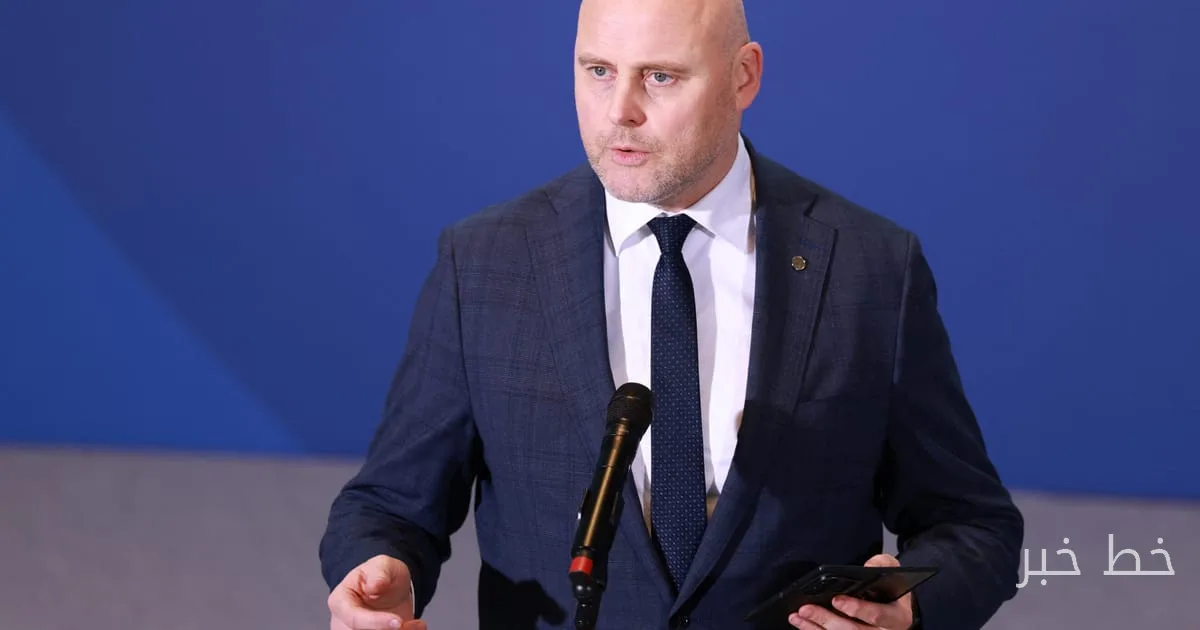
Andris Kulebs, the Prime Minister of Latvia, called for the closure of EU borders to all Russian citizens and stated that the Union cannot process the hundreds of thousands of Russian tourists who are still allowed entry. He told a media outlet: "The entry of this number into the EU is currently very dangerous. We must not yield to Russia and must not show weakness."
Stopping Normal Relations with Moscow
Kulebs also emphasized that after any ceasefire in Ukraine, returning to normal relations with Moscow is impossible. He stated: "Some believe that after a ceasefire, it is possible to return to normal relations with Russia. This is not possible. This is a new era."
Latvia was one of 11 countries that signed a letter to Sweden's leadership in June, asking Brussels to limit visas for Russians. Migration Commissioner, Magnus Brunner, indicated in October that the European Commission might propose something in this regard next year.
Increase in Russian Hybrid Attacks
Kulebs warned that Russian hybrid attacks on NATO's eastern flank are increasing, saying: "The situation is escalating." He added that special forces from Latvia and Estonia arrested eight people on Estonian soil last week who had "specific orders to attack a production facility in Estonia that supports Ukraine." He emphasized that "Russia is involved in this matter."
He referred to the upcoming months as the "Winter of Truth" and argued that Russia is attacking Ukraine's water, heating, and electricity infrastructures because it is not making significant progress on the fronts, and is also trying to influence public opinion in Germany and other countries. He said: "Putin wants Germans to be scared and to ask their government to stop supporting Ukraine."
Kulebs also expressed concern that the summit on Thursday between Donald Trump, Xi Jinping, and Vladimir Putin could be seen as a new Yalta and deemed this notion "exaggerated," stating that the Russian leader has been humiliated in these negotiations. The Yalta Conference in February 1945 was where U.S. President Franklin D. Roosevelt, British Prime Minister Winston Churchill, and Soviet leader Joseph Stalin gathered to shape the post-war order in Europe.
The Latvian Prime Minister urged major countries, especially Germany, not to succumb to war fatigue, saying: "It is entirely possible to be pro-European, strongly support Ukraine, stand against the aggressor, and at the same time win elections by a large margin."