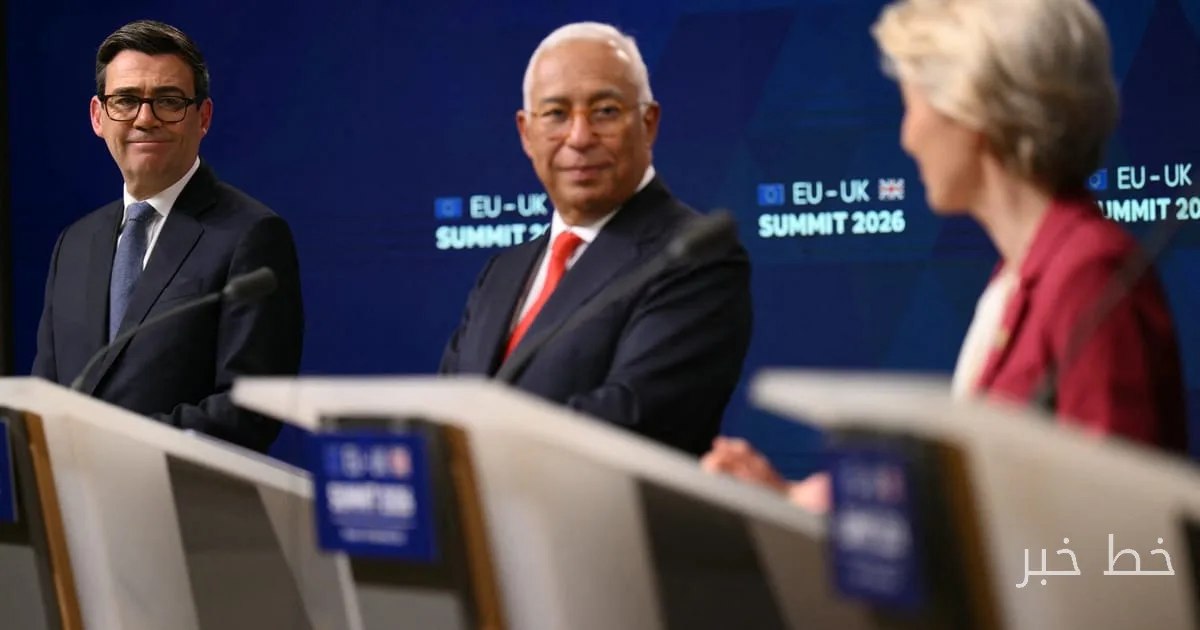
Leaders of the UK and the European Union announced new agreements on Friday in the areas of food and drink, carbon trading, and youth experience programs. These agreements, described as a "victory for both sides," actually have more complexities.
Details of the New Agreements
A press conference following the summit failed to clarify whether the new food and drink regulations, carbon trading, and youth visas are linked to tuition fee agreements. UK Prime Minister Andy Burnham emphasized that these agreements are "complementary" and negotiations regarding tuition fees are still ongoing.
Read more: Marine Le Pen announced her change of stance on same-sex marriage and dual citizenship
If these agreements are implemented, both sides will have winners and losers in the English Channel and beyond. British and EU students are among the biggest winners of these agreements, as they will benefit from the youth experience program and tuition fee agreements.
Impact on Markets and Industry
Under the new program, 100,000 young people will be able to spend three years working or studying in the UK or the EU, which is a significant improvement over current visa requirements. Additionally, under an agreement that is still not finalized, students may benefit from lower tuition fees when studying abroad.
British chain stores, many of which trade with the EU, welcomed the new agreements in agriculture and food. Major brands like Tesco and M&S stated that these agreements will make trade with Europe easier and cheaper. The goal of this agreement is for the UK to align with EU food regulations by 2028.
Moreover, UK renewable energy producers are also pleased with these agreements. The decision to link the carbon trading systems of the UK and the EU from 2028 means that clean energy exported to the continent will not be subject to the EU's carbon border tax.
Challenges Ahead
While the new agreements have been generally assessed positively, there are also challenges. Markets are facing rising energy costs, and it remains unclear whether retailers will be able to pass on any savings to customers. Additionally, financially, London is still distanced from EU markets, and as Burnham pushes for financial improvements, there are hopes for further cooperation.
Given that many factors depend on the tuition fee agreement, the UK government is under increasing pressure to finalize this agreement. Universities are also concerned about these changes and have stated that reducing tuition fees for EU students may negatively impact the study places for British students.
Read more: Examining Britain's financial challenges at the UK-EU summit · James Bond comes to cinema through the lens of EU policies