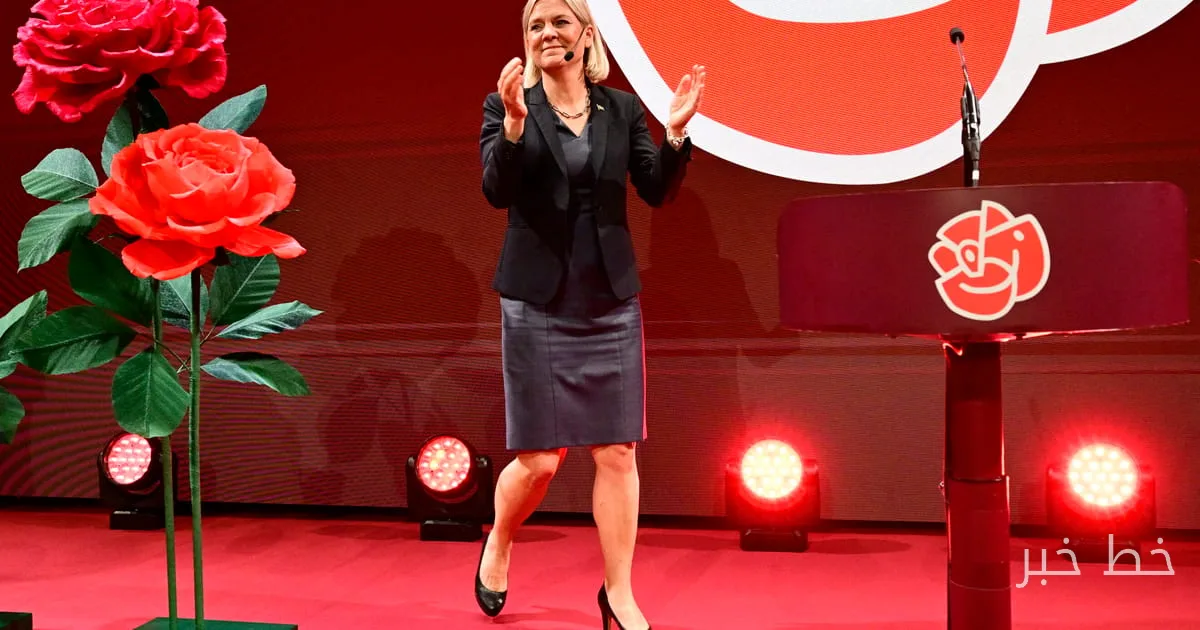
Magdalena Andersson (Magdalena Andersson), leader of the Social Democratic Party of Sweden, is on track to become the next Prime Minister of the country following a decisive victory in the recent elections. Preliminary results show that her leftist coalition has surpassed the right-wing and extremist coalition led by Ulf Kristersson (Ulf Kristersson) with 99.9 percent of the votes.
Election Results and Surpassing Right-Wing Rivals
As of 10:30 PM on Wednesday, Andersson's four-party coalition had three more seats than Kristersson's right-wing and extremist coalition in the race for control of Sweden's 349-seat parliament. This election is considered one of the closest contests in contemporary Swedish history, allowing voters to choose between a leftist government or the entry of extremist ministers into power.
The Swedish Election Authority is set to confirm the "provisional" results, which are expected to be announced after the counting of votes is completed on Thursday. Swedish public media, including SVT, have officially announced Andersson's victory. The Social Democratic Party, Sweden's largest party, has the unofficial support of three other opposition parties that are recognized as potential coalition partners: the Greens, the Centre Party, and the Left Party.
Future Challenges and Coalition Negotiations
Kristersson's Conservative Party, along with the Sweden Democrats, known for their extremism and anti-immigration stance, are trying to influence the outcome. Kristersson's allies do not expect him to easily accept defeat until Andersson secures a vote in parliament that demonstrates her ability to form a majority. This vote is unlikely to take place before September 29.
Once the final results are confirmed, coalition negotiations will begin in earnest. In theory, any combination of parties can form a government, but in practice, the two-block system is likely to remain in place. For this reason, Andersson is seeking to govern with some or all of the parties aligned with her.
This election not only reflects the political inclinations of Swedish citizens but could also have profound implications for Sweden's domestic and foreign policies. Andersson's victory could mean the continuation of leftist policies in Sweden, while a victory for the right could lead to fundamental changes in immigration and economic approaches.
Read more: The US government should meet with Kim Jong-un and establish an agreement to end the Korean war