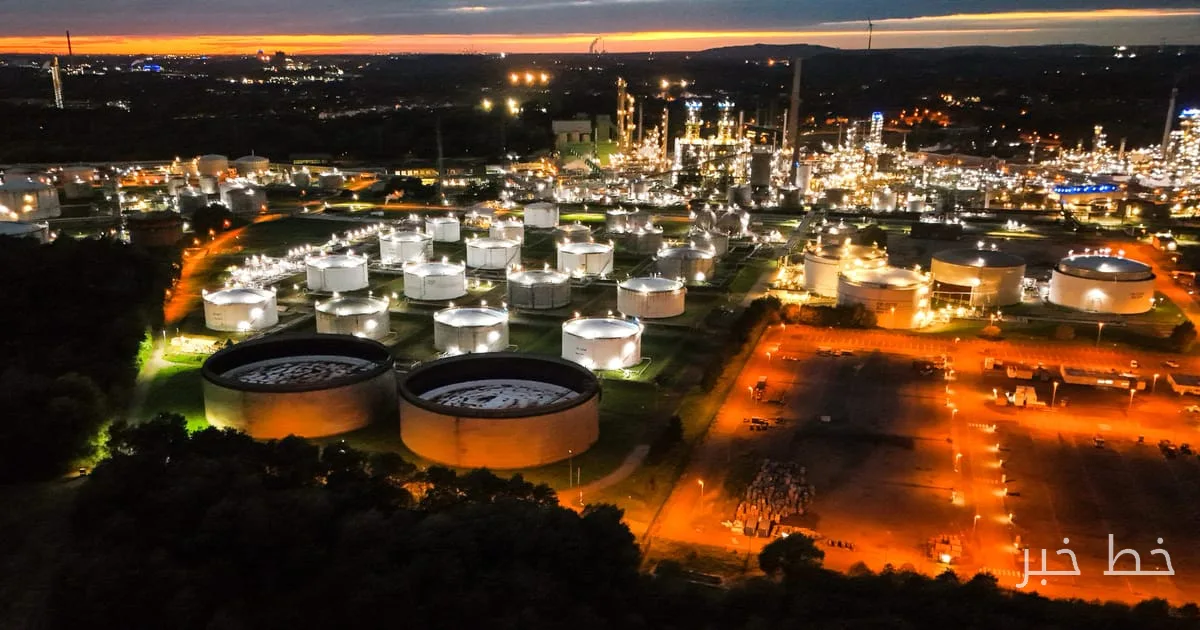
Major oil companies around the world now have the opportunity to present themselves as green investments in the European Union. This development is a result of a recent revision of the EU's sustainable finance regulations that has been approved.
Agreement on New Sustainable Finance Regulations
EU member states and lawmakers reached an agreement late Thursday to update the Sustainable Finance Disclosure Regulation (SFDR). This agreement allows private companies to direct their investments towards new fossil fuel projects. This was the second major victory for the oil industry in Europe on the same day, as the EU also decided to delay the implementation of methane emission regulations for fossil fuel companies by two years.
Read more: Greg Stanton warned that oil companies will face consequences from importing Russian diesel
This agreement significantly facilitates the proposed regulations by the European Commission aimed at attracting more investment to companies moving towards cleaner business models. The European Commission decided last November to revise the SFDR to prevent greenwashing and assist investors in making sustainable investment decisions.
New Criteria for Identifying Green Investments
According to the final agreement, companies must allocate one-fifth (20 percent) of their capital expenditures to green activities, and this amount must be meaningfully increased annually. Additionally, companies must present a plan to reduce their greenhouse gas emissions in accordance with the Paris Agreement, although emissions from downstream activities, which constitute a major portion of oil and gas companies' emissions, do not need to be covered in these plans.
This decision allows large companies like TotalEnergies of France and Repsol of Spain to access transition funding based on their capital expenditures in 2025. While many EU member states are seeking to reduce dependence on fossil fuels, the final agreement seems to cater more to the interests of major oil companies.
Alexandra Plinska, executive director of the sustainable finance NGO Yurosuf, stated that the agreed criteria cannot distinguish between companies that are genuinely transforming their business models and those that are merely greenwashing. This could lead to ambiguity in identifying real sustainable investments.
While lawmakers voted in October to stipulate that major oil companies could only fall into the transition category if they invest more in new fossil fuel projects, the final agreement ultimately aligned closely with the demands of EU member states.
Grabenjan Gerbrandi, who led the negotiations in Parliament, expressed satisfaction with the final agreement, stating, "I think we reached a result that aligns with my criteria for credibility and administrative burden, so I am very pleased."
Read more: The International Energy Agency declared the Middle East crisis the biggest threat to energy security · Germany emphasizes the creation of a sustainable financing plan for Ukraine