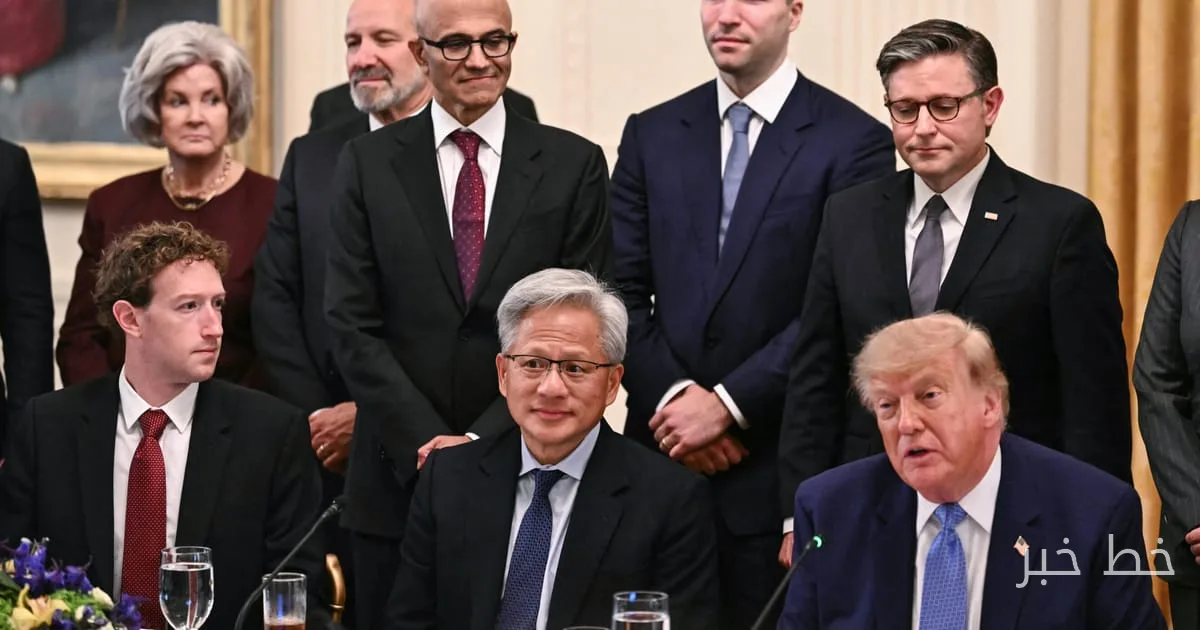
Mark Zuckerberg, CEO of Meta, acted as the primary architect of "ethically binding" agreements on artificial intelligence (AI) during a lunch held on Tuesday at the White House with Donald Trump, the President, and Mike Johnson, the Speaker of the House. Over a dozen technology leaders were also present at this lunch.
Details of the Agreements
Zuckerberg, in collaboration with Jensen Huang, CEO of NVIDIA, presented these agreements to senior White House officials and several top technology names. Huang and Trump administration officials helped draft this agreement prior to the meeting. According to the documents of this agreement, participants commit to recognizing the importance of establishing necessary measures to mitigate potential risks arising from advanced AI models. However, due to the lack of a clear mechanism for enforcing this agreement, it is unclear what consequences are in place for non-compliance with these commitments.
Read more: Cristina Atchbury Supports Businesses in Latin America
Impact on White House Policies
This event reflects the growing influence of Mark Zuckerberg and Jensen Huang on White House policies regarding artificial intelligence. While the administration continues a hands-off approach to regulating this technology, Congress has yet to pass a federal law to regulate AI. Sources familiar with the details of this meeting say that the idea for this agreement was formed at a formal banquet in honor of Xi Jinping, the President of China, and Zuckerberg presented this idea to Johnson.
Some Democrats and AI safety advocates criticized these agreements, deeming them unenforceable and largely based on mutual agreements. Zuckerberg emphasized in remarks to reporters at the White House that "this is just the first step and an agreement that the entire industry can adhere to." Donald Trump has also publicly expressed reluctance towards new proposals for stronger measures in the field of artificial intelligence, believing that existing laws are sufficient.
In contrast, some other technology leaders, including Dario Amodei from Anthropic and Sam Altman from OpenAI, have called for more government intervention to regulate this technology and slow its development. Zuckerberg and Huang have responded to criticisms that AI could be a threat to humanity, dismissing them.
Read more: Ted Cruz Stopped Democrats' Efforts to Pass AI Safety Law · U.S. Senate Voted on Data Center and Internal Transactions Bills