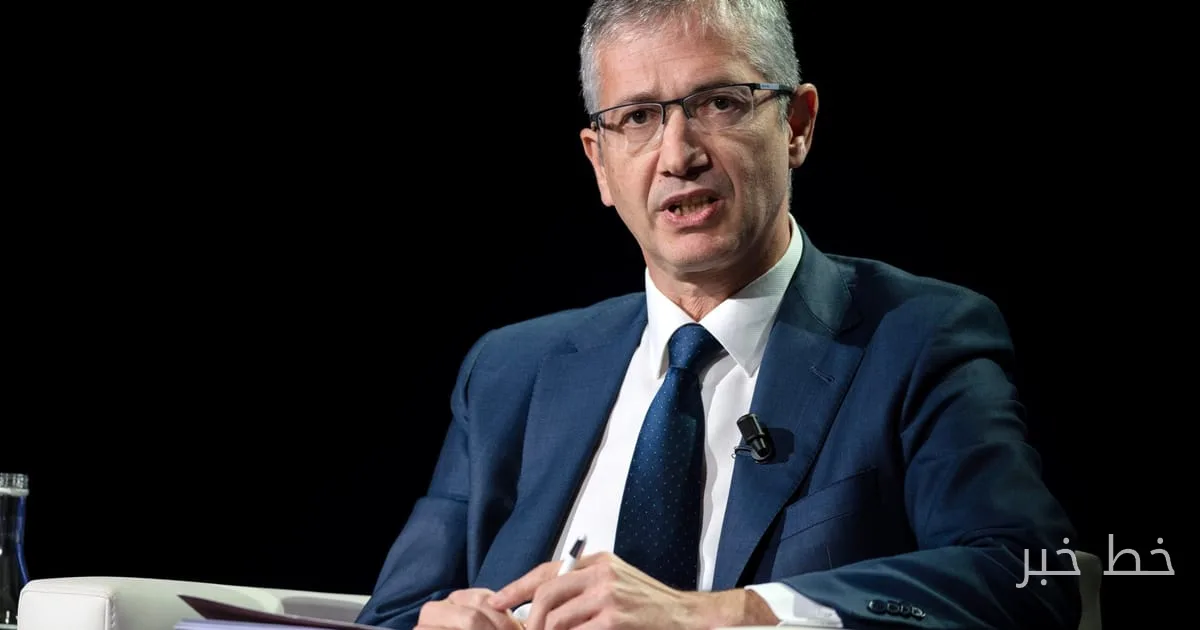
Spain is moving towards one of the most powerful economic positions in Europe, as the Netherlands has withdrawn from the competition for the presidency of the European Central Bank (ECB).
Netherlands' Support for the Political Agreement
At the EU leaders' meeting, Mark Rutte, the Prime Minister of the Netherlands, supported a political agreement designed by France, Germany, and Spain in recent weeks to determine the leadership of the European Central Bank. Initially, the Netherlands had nominated Klaas Knot, its former central bank president, for this position, but this agreement led him to withdraw from the competition.
Read more: European Commission Rejects Trump's New Tariff Request
According to this agreement, Pablo Hernández de Cos, the former president of the Bank of Spain, will succeed Christine Lagarde, the current president of the European Central Bank. Lagarde is set to step down from this position on February 7. In exchange, Germany will appoint Markus Brunnermeier as the chief economist of the European Central Bank, and the market portfolio will go to Laurent Bon, France's representative on the bank's executive board.
The Role of the European Central Bank in Economic Policies
The European Central Bank is responsible for setting interest rates that affect borrowing costs across this single currency bloc and is tasked with maintaining inflation at 2 percent over the medium term. According to an EU diplomat, "based on today's discussions" among EU leaders, "the Netherlands will support the agreement for the nomination of three individuals to the ECB board." Such an agreement is seen as "an important signal for financial markets."
EU ambassadors have recently officially introduced three candidates for positions at the European Central Bank. This move allows EU leaders to start a "consultation process" today with the European Parliament and the European Central Bank, which have the right to express their opinions on these three candidates.
The texts of the agreement approved today by the European Council recommend Pablo Hernández de Cos as the President of the European Central Bank and Laurent Bon and Markus Brunnermeier for the executive board. A session in Parliament is scheduled for December 7, after which a committee vote will take place and must be approved in a plenary session the following week. Leaders will then formally finalize this agreement at their next meeting in Brussels on December 17.
Read more: German Companies Seek Business Opportunities in Africa · France and Germany Introduce Candidates for Leadership of the European Central Bank



