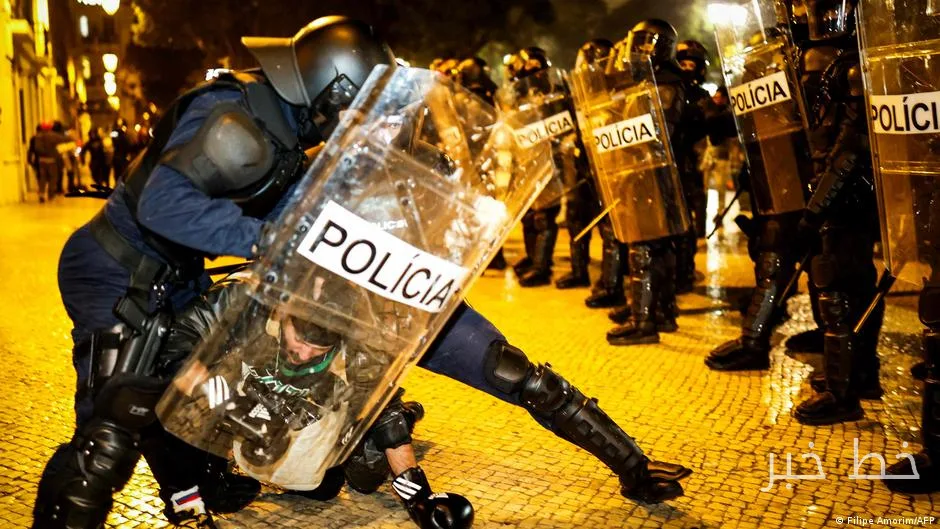
Portuguese police evicted protest camps in the two cities of Lisbon and Porto on Sunday. This action was taken after thousands of protesters demonstrated on Saturday against the housing crisis and a bill that facilitates the eviction of tenants.
Eviction of Camps and Clashes
At 4:30 AM local time, a number of police officers raided the protest camps in "Rossio" square in Lisbon and "Dom João I" square in Porto. These camps had been set up by participants in a demonstration against rising housing costs. The police used shields and batons to disperse the protesters and stated that some protesters threw bottles and paint at the officers.
During this operation, six people were arrested in Lisbon and seven in Porto for failing to comply with dispersal orders. According to a police statement, 13 officers were injured during the eviction of the camps, with eight of them being hospitalized. Additionally, several civilians were also injured in these clashes.
Criticism of Police Response and New Protests
One of the lawyers representing the detainees in Porto stated that the police response was disproportionate and their actions were excessive. The activist group "Acampada Lisboa" reported that over 30 protesters were injured, with 10 of them requiring hospital treatment. This group also announced a new protest in Lisbon against the police operation on Sunday afternoon, stating in a statement: "We will not be silent."
Hours before the eviction, over 1,000 people protested in central Lisbon to highlight the deep housing crisis in Portugal. Protesters are calling for the cancellation of plans that make it easier to evict tenants and are also demanding an end to the imposition of rent ceilings for new contracts.
Luís Montenegro, the Prime Minister of Portugal, has refused to back down from this bill, although he acknowledged that reforms may be made before the final vote. Portugal is currently facing one of the most severe housing crises in Europe, with housing prices more than doubling since 2017.
Read more: The European Commission proposed to increase the powers of the Frontex border agency