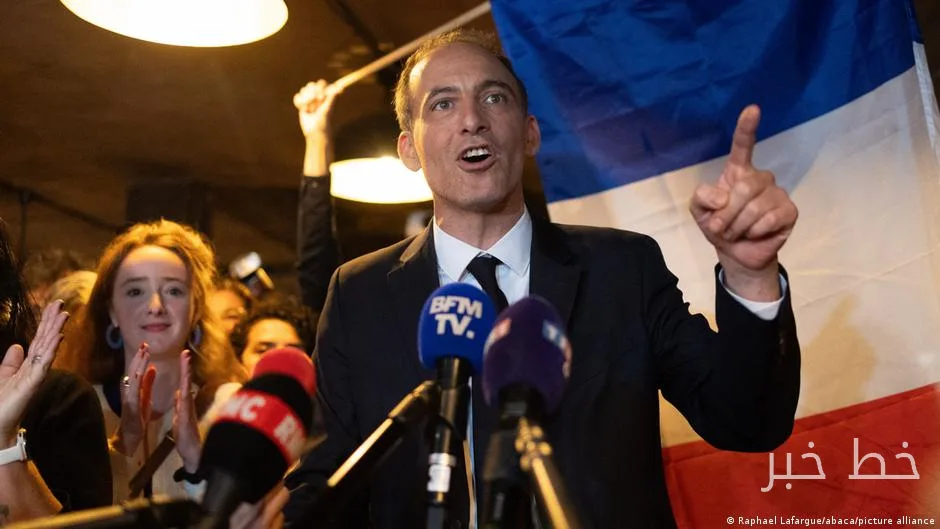
Raphaël Glucksmann, a Member of the European Parliament from the French Socialist Party, achieved a decisive victory in the first round of the Socialist internal elections on October 11 in the historic working-class neighborhood of Belleville, securing 66% of the votes. This victory introduced him as the Socialist candidate for the 2027 presidential elections in France.
Attack on Glucksmann After Victory
After leaving the restaurant Cantine de Belleville, Glucksmann was attacked and bombarded with flour. The next morning, Glucksmann called on his rival, Jean-Luc Mélenchon, to condemn the attacks carried out by his supporters. Although it is unclear whether the attacker was indeed a supporter of Mélenchon's party, this incident has revealed challenges for his candidacy in the weeks to come.
The main challenge for Glucksmann is how he can attract Mélenchon's supporters while refusing to collaborate with their candidate. The key question in the Socialist campaign was, "What is your position on Mélenchon?" While Olivier Faure, the party leader, supported cooperation with Mélenchon's party, Glucksmann called for a clear separation from the far left. His decisive victory in this election is also seen as a vote for this separation.
Challenges Ahead for Glucksmann
Despite his victory in the internal elections, Glucksmann's starting position is difficult. Polls conducted by Toluna Harris Interactive after his victory indicate that he will only secure 10 to 11% of the votes, while Mélenchon has garnered 18% of the votes. This poll was conducted before Glucksmann's victory and therefore may not account for the impact of his candidacy on the votes. However, 10% would represent a significant improvement compared to the Socialist performance in the 2022 presidential elections, when their candidate, Anne Hidalgo, received only 1.75% of the votes.
Additionally, the Socialists, led by someone affiliated with the "Place Publique" party, which they are not a member of, hope to emerge from irrelevance. Glucksmann, as an independent from a small party, is struggling to garner sufficient support.
Glucksmann is also facing challenges in attracting young voters. Recent polls show that Mélenchon has secured 41% of the votes among voters under 25, while 20% of this age group supports Marine Le Pen, the far-right candidate. Young people in France are deeply divided, and Mélenchon still holds an advantage on the left.
Glucksmann is trying to alleviate the financial pressure on young people by proposing a reduction in income tax and an increase in inheritance tax on estates over two million euros. He is also being introduced as a strong supporter of European integration, while Mélenchon views the European Union as a neoliberal entity. Glucksmann's political views combine calls for social policy and foreign policy positions that may also appeal to voters supportive of Emmanuel Macron.
Finally, Glucksmann must also pay attention to the challenges related to his policies on Ukraine. He supports strong backing for Kyiv, while Mélenchon believes in military assistance only under specific conditions. In the 2024 elections, LFI representatives voted against the France-Ukraine security agreement.
Read more: Zelensky Pressures European Leaders for More Support for Ukraine