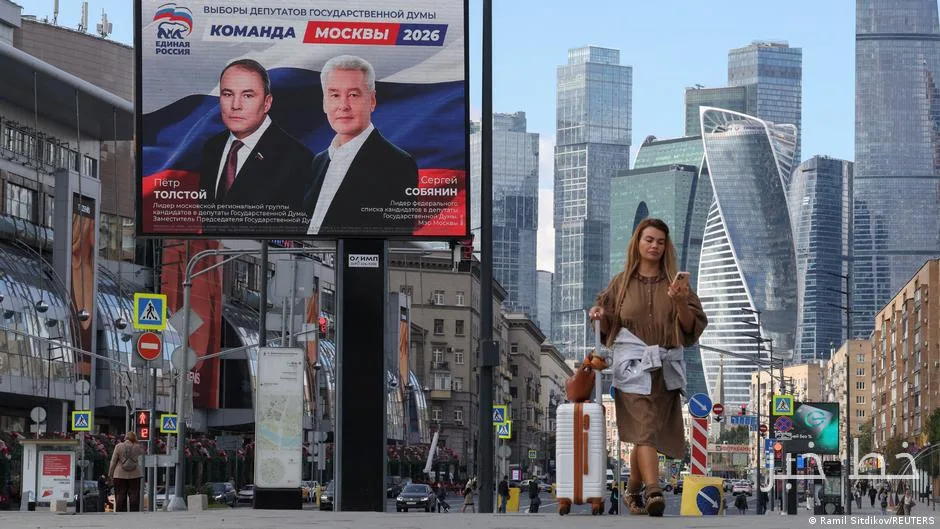
Russia is on the brink of new parliamentary elections (Duma). These elections will take place from September 18 to 20, 2023, and are the first since the start of the war with Ukraine. While official results are not expected to change much, the Kremlin is closely monitoring voter turnout.
Concern and War Fatigue Among Russians
Recent polls indicate that feelings of concern are on the rise among the Russian populace. According to data from the state pollster FOM, nearly half of the participants expressed anxiety as the predominant feeling among those around them. Additionally, 60 percent of Russians believe that the war with Ukraine has had negative impacts on their daily lives.
Marta Zavadskaya, a sociologist and senior researcher at the Finnish Institute of International Affairs in Helsinki, points to changes in public opinion, stating: "Anxiety and war fatigue stem from increasing uncertainty." She believes that rising prices, internet restrictions, fuel shortages, and rumors of a potential new draft have made future planning difficult for Russians.
Election and Its Impacts on Russia's Future
Parliamentary elections in authoritarian systems like Russia rarely lead to democratic changes, but they still hold significant importance. These elections are seen as a real test of the people's loyalty to the government. For Vladimir Putin, the President of Russia, this is particularly important in the current circumstances.
In the fifth year of the Ukraine war, there are no signs of the Kremlin's willingness to end this conflict. The "United Russia" party, which is effectively led by Putin, is campaigning on victory in the war as one of its priorities. However, many Russians want the war to end. Yulia Galimina, an opposition politician, recently stated: "The silent majority just wants the war to end."
Recently, independent polls show that 60 percent of Russians support peace negotiations with Ukraine. This public sentiment may push the Kremlin towards new negotiations in October, which could be a tactic to appease voters.
The liberal party "Yabloko" is the only registered political force opposing the war in Ukraine. According to independent polls, 18 percent of Russians would vote for Yabloko, but this party has recently been barred from participating in the elections.
Yulia Navalnaya, the wife of Alexei Navalny and an opposition politician in exile, has urged supporters to back any party except United Russia. Yabloko has also called on voters to spoil their ballots.
Despite these efforts, Yashin, an opposition politician, states that the most important issue is to show public discontent through participation at polling stations. He emphasizes: "These lines represent public dissatisfaction. There is no need for a flag, banner, or specific symbol. Everyone will know that these lines are made up of people who do not want the war to continue."
The majority of respondents in a recent poll stated that they want to participate in the elections to show that they have a stance. Others have decided not to participate in the elections, stating that they do not want to legitimize Putin's regime.