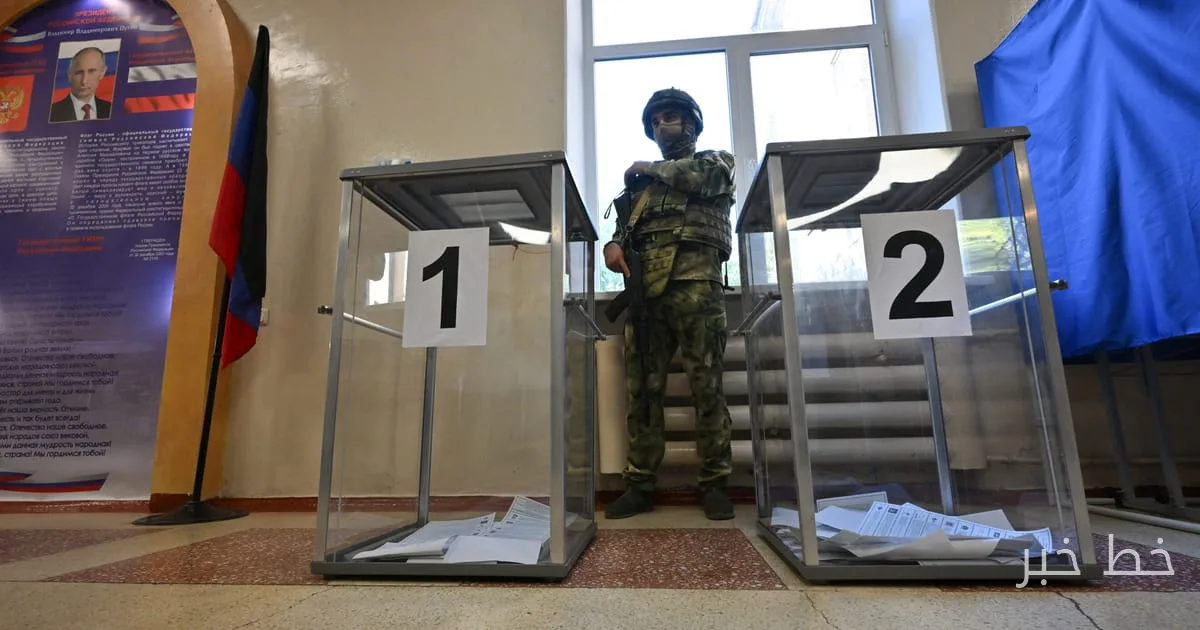
The Russian parliamentary elections are being held this weekend for the first time since the full-scale invasion of Ukraine began in 2022. These elections are taking place while opposition parties are struggling to provide options for voters in an increasingly Kremlin-restricted environment.
Impact of the War on Elections
The shadow of war looms over the electoral process. With intensified Ukrainian attacks on Russian cities and rising civilian casualties, the Russian Supreme Court in August did not allow the Yabloko party, the only anti-war party in the country, to present a national list of candidates in the Duma elections. In this context, some opposition figures, such as Yulia Navalnaya, the wife of Alexei Navalny, have urged Russians to vote for candidates who at least appear neutral regarding the war.
Read more: Russian Parliamentary Elections Begin with Key Opposition Ban
Show Elections and Opposition Concerns
However, other Kremlin opponents argue that Navalnaya's strategy legitimizes these show elections, which are merely held to justify Vladimir Putin's maximalist war against Ukraine and reinforce his control over Russian society. Sergey Lavrov, the Russian Foreign Minister, stated in a campaign ad for the "United Russia" party: "Do not expect mercy from anyone who comes at us with a sword."
These comments reflect the Kremlin's concern about public fatigue with the war. By eliminating anti-war candidates from the ballot and promoting pro-war voices, Moscow is trying to portray public support for the invasion of Ukraine as greater than it actually is. Ivan Preobrazhensky, a Russian political scientist based in Prague, said: "By voting for them, people are essentially endorsing the policies of the ruling party and government, even if voters do not have a real choice."
In this election, ten parties, including Putin's "United Russia" party, the Communist Party, and the Liberal Democratic Party, are competing. Members of these parties uniformly support the annexation of eastern Ukrainian regions to Russia and echo Moscow's pro-war slogans.
While some Yabloko candidates are allowed to compete in single-member constituencies, this decision allows pro-war politicians to maintain their control over the Duma.
Navalnaya has described the upcoming elections as a "propaganda exercise" for Putin and emphasized the importance of preventing results that would lend credibility to the war. She and Katz are promoting what they call "smart voting," which involves supporting candidates who are opposed to or at least less supportive of the war than others.
Read more: Argentina Intensifies Its Claim Over the Falkland Islands · Friedrich Merz Remains Chancellor of Germany