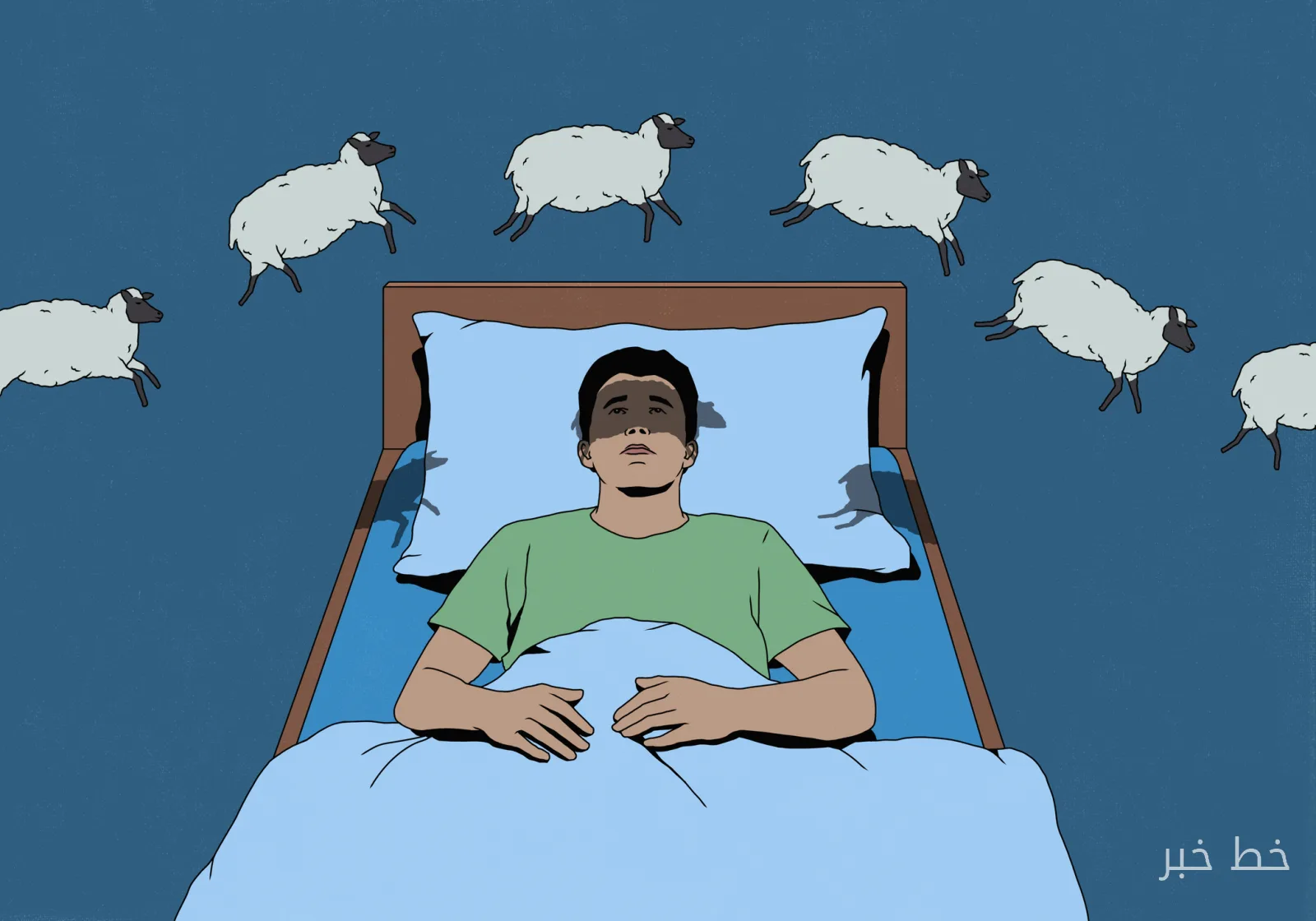
A new patient sat in my office a few months ago and started talking before I could say hello. He hadn't slept well for months, and it was quite evident. He spoke rapidly with his wife, looked tired at work, and referred to his bed as a place that had deceived him. He showed me his sleep score: 61 out of 100. "Look how bad it is," he said.
Increased attention to sleep and its consequences
I have seen this situation time and again. A week or two of poor sleep, under constant scrutiny, can lead to a diagnosis of clinical insomnia. In recent years, sleep has become a public alarm bell, and sleep scoring has turned into a social status symbol. In this context, individuals are taking drastic measures to optimize their sleep, a phenomenon known as "orthosomnia."
Read more: Greg Stanton emphasized the importance of re-evaluating children's education
Orthosomnia and its implications
Orthosomnia is an unhealthy preoccupation with achieving ideal sleep, which in itself causes insomnia. This condition somewhat mocks itself. You cannot achieve good sleep while constantly checking if you are calm enough to fall asleep.
Sleep care is usually presented in the form of checklists that mention behaviors like regular bedtime and avoiding screens before sleep. These rules are not inherently wrong, but they are presented as strict checklists that real people are pressured to follow every night.
Many patients feel shame over "failing" to meet these standards. But in reality, these failures are not clinical. Sleep is not a public matter and varies for each individual. Therefore, I advise my patients to view sleep as a menu of individual options rather than following a strict checklist.
Ultimately, sleep is not something you want to dominate. Rather, it is a menu that you continuously rewrite and adjust as long as it fuels your real life.
Read more: The White House has retreated from its NIH grant control program · Does your partner's snoring endanger your health?