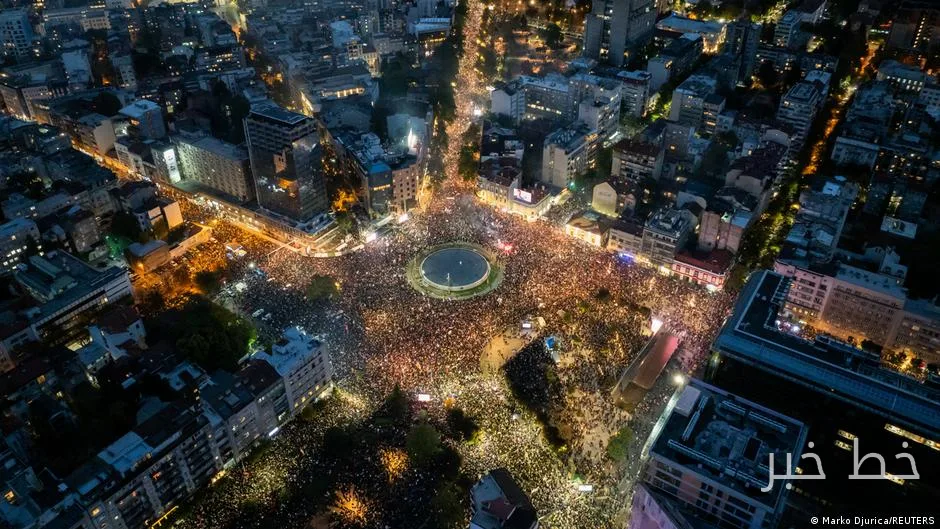
Students in Serbia gathered on Thursday in Belgrade for their final election rally. This gathering was held as a representative of the student list, which includes a group of candidates who have protested against the government for nearly two years.
The Student List and Its Demands
The student list is calling for an end to the current regime through voting in the elections on Sunday. Many attendees at this rally spent days reaching the capital, turning the event into a display of solidarity and peaceful determination. Arsa Stojanović, a biology student, told the crowd: "We walked from one side to the other of Serbia, looked into your eyes, and realized that we can count on you."
Read more: South Korea Calls for Military Talks with North Korea on Border Tensions
Election Challenges and Political Situation
Serbia is facing an unusual election that has been unprecedented in the last 14 years. This is the first time the ruling party, the Serbian Progressive Party (SNS), is facing serious political challenges from a student movement that has turned public discontent into an election campaign. Dason Spasović, a political expert, said: "This election is the first competitive election since Aleksandar Vučić came to power in 2012, and its results are uncertain."
The student list sees the election as an opportunity to tackle corruption and demand accountability for an incident that symbolizes institutional failures. Meanwhile, the SNS presented a familiar message at its final rally in Belgrade: "Voting for SNS means stability and continued prosperity, and changing the government carries the risk of chaos."
The election campaign has faced increasing violence. The independent electoral monitoring organization CRTA reported that 116 incidents of violence or verbal threats were recorded during the final week of the campaign. Additionally, opposition activists, especially those affiliated with the student list, have been under police surveillance and interrogation.
As the elections approach, investigative reports about potential connections between individuals linked to the ruling party and criminal networks have emerged. These reports have drawn attention to issues of corruption and political influence, raising serious questions about transparency and fairness in the electoral process.