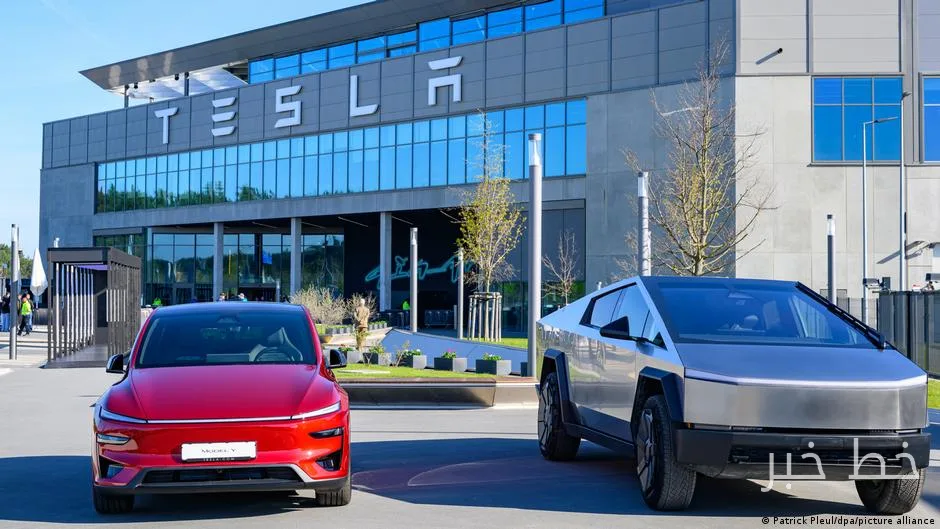
Tesla, led by Elon Musk, announced on Friday that the company will reduce Cybertruck production at its factory in Austin next year. Musk emphasized that the goal of this reduction is to create space for increasing the production of Cybercabs, which are set to operate as a fleet of self-driving taxis.
Cybertruck Production and Its Challenges
Musk stated in a post on his social media: "Tesla will reduce Cybertruck production at the Texas Gigafactory in the middle of next year so that we can increase Cybercab production." This news comes after a tough week for Musk, as his companies faced declining market values and Republicans encountered challenges in the U.S. midterm elections despite his financial support.
Read more: Cyberattacks on French Blood Banks Target Cooling Systems
The Cybertruck, criticized for its unique design and large body, has not achieved the expected successes. Last year, Tesla sold only 20,237 Cybertrucks in the U.S., down from 38,965 units in 2024. This is despite forecasts at the time of its unveiling in 2023, which predicted sales of nearly 250,000 units.
Cybercab Outlook and Future Developments
Musk recently responded to a user who described the Cybertruck as "the best vehicle Tesla has ever made," saying, "That's true." Meanwhile, the Cybercab is designed as Tesla's flagship self-driving model and is without a steering wheel, pedals, or side mirrors. This vehicle is specifically designed for use in self-driving taxi fleets and is not meant to be controlled by a human.
In recent months, about 300 Cybercabs have been registered and started operating in the Austin area. These vehicles have been added to the existing Tesla fleet and operate in an area of approximately 680 square kilometers (264 square miles).
Tesla does not publish sales figures broken down by model due to ongoing challenges in meeting Musk's sales and production forecasts. However, it is expected that the reduction in Cybertruck production will soon come to an end, and this model may have a shorter production lifespan compared to its five years of research and development.
Read more: The U.S. Opposed France's Request for Collaboration on AI Safety at G7 · Elon Musk Supported the Possibility of Merging SpaceX and Tesla