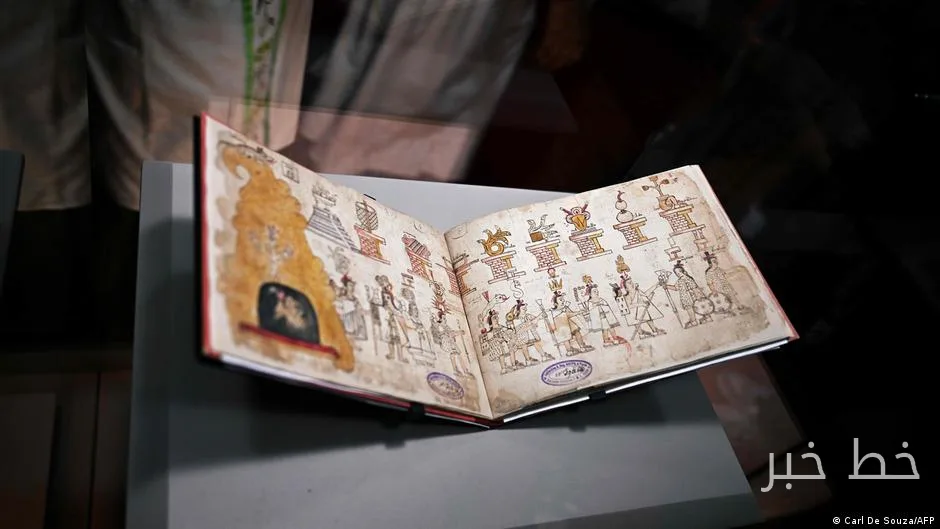
The Azcatitlan Codex, a rare and valuable manuscript that vividly narrates the history of the Aztecs through images, has returned to Mexico for the first time since 1840. This historical work was exhibited on Thursday in Mexico City.
History of the Azcatitlan Manuscript
This collection, dating back to the sixteenth century, is recognized as one of the most important visual sources of Aztec history. The manuscript includes the history of the founding of the Aztec capital and its fall after the arrival of Spanish conquerors.
Read more: Dana Awartani Explores the Power of Art in Healing Cultural Wounds
The Azcatitlan Codex was transferred as a loan from the National Library of France to Mexico, where it has been kept since 1898. This loan was made to celebrate the two-hundredth anniversary of diplomatic relations between the two countries.
Statements from Mexican Officials
At the opening ceremony, Roberto Velasco, Mexico's Foreign Minister, stated that this exhibition was held with the aim of "bringing together a population with its collective memory." He added that the images in this collection represent "our history, the written voice of our ancestors, and the deep roots of our identity."
Mexico has long sought the return of this valuable work. Emilia Mendoza, a member of the Hñahñu community, said at the exhibition: "They hid our history from us, they stole it!" She considered this return a "victory in a battle" and the first step towards reclaiming similar books.
This manuscript includes images of the migration of Mexica from Aztlan, the legendary birthplace of the Aztec civilization, to the founding of Tenochtitlan, the capital of the Aztec Empire. It also depicts the succession of city rulers, the arrival of the Spanish, and the missionary efforts that followed.
Vivid colors such as red, blue, green, and yellow are used in this work, and warriors are depicted in feathered crowns and religious ceremonies in the pyramid temples.
More than five centuries have passed since the fall of Tenochtitlan to Hernán Cortés, the leader of the Spanish forces. Cortés and his companions looted the city after its conquest, marking the beginning of three centuries of Spanish dominance.
This manuscript will remain on display until December. As part of this exchange, Mexico will loan another important historical document called the "Boturini Codex" to France, which also depicts the migration of the Aztec people to the Mexican plains.