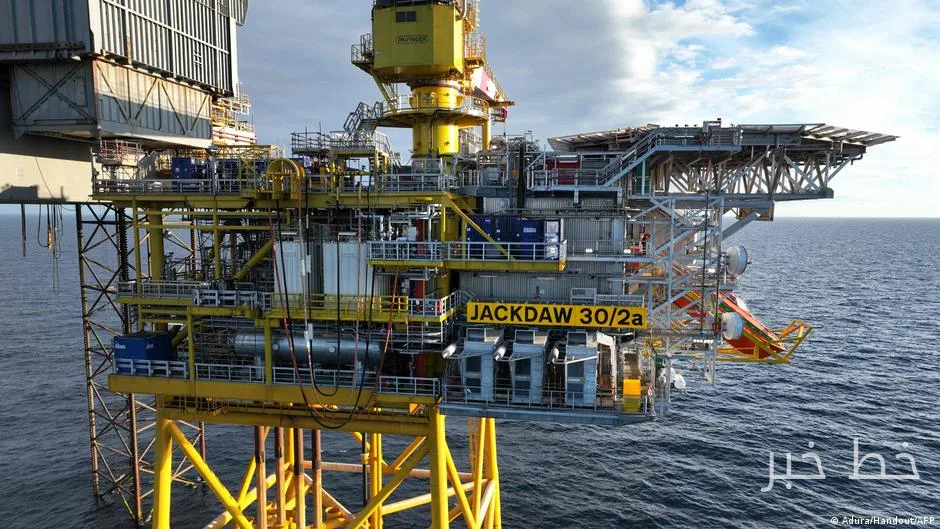
The British government issued a permit for drilling in the Jackdaw gas field in the North Sea on Wednesday. This decision was made after years of legal and political challenges that had hindered the progress of this controversial project.
Reasons for Approving Drilling
The Labour government has justified this action as a way to strengthen the country's energy security in light of rising energy costs resulting from the United States and Israel's war against Iran. The Jackdaw gas field had previously been approved by the former Conservative government, but was halted by a Scottish court due to concerns about carbon emissions.
Read more: The International Energy Agency is releasing over 20 million barrels of diesel
Impacts and Criticism
The Jackdaw field is located about 240 kilometers east of Aberdeen, Scotland. Andy Burnham, the Labour Prime Minister, stated that this new field "will preserve hundreds of jobs and help keep millions of homes warm this winter," while also emphasizing that the UK is moving towards renewable energy but will still need oil and gas for decades.
Miata Fahn-Bolle, the Energy Minister, announced that gas could be delivered to British homes and businesses by the end of this month. It is expected that Jackdaw will increase domestic gas production by 6% and be operational for 11 years. However, this action has also faced severe criticism. The Green Party has called it "climate destruction," and Greenpeace has emphasized that this approval reflects the dominance of fossil fuel lobbies over UK energy policy.
Critics also point out whether this project will actually impact gas prices in the UK, as prices are determined by global energy markets. In an effort to demonstrate the government's commitment to its climate goals, alongside the approval of Jackdaw, the establishment of a new energy wealth fund with £2 billion ($2.7 billion) has been announced, aimed at transitioning oil and gas revenues towards cleaner energy.
The UK aims to reduce carbon emissions to zero by 2050, but this goal must be assessed against existing realities, as a new UN report indicates that the world is on track for a temperature increase of 2.8 degrees, well above the 1.5-degree target of the Paris Agreement.
Read more: The International Energy Agency is releasing emergency oil reserves · Cuba has transferred its oil sector to private companies