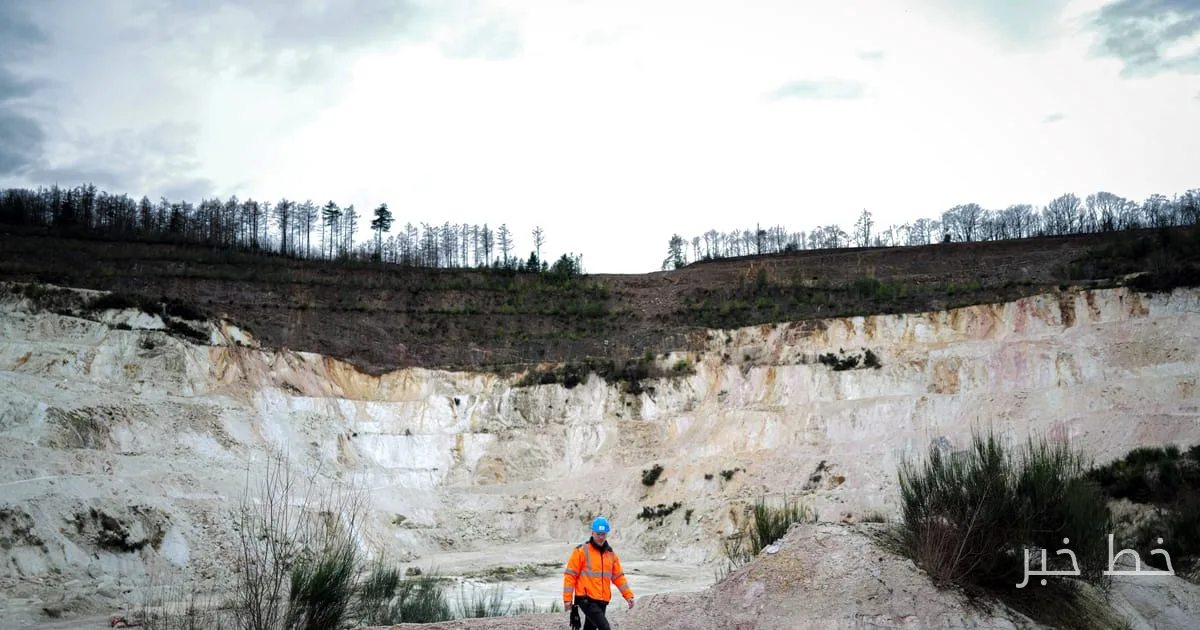
The European Commission announced a new list of 46 mineral projects on Friday to reduce its dependence on China and achieve mineral sovereignty. These projects include the extraction, processing, recycling, and substitution of raw materials to meet the needs of the defense, automotive, clean technology, and technology sectors.
Key Projects and Their Impact
Many of the projects are designed to support electrification and the battery value chain. Lithium, nickel, cobalt, manganese, and graphite — five key metals used in electric vehicles and grid-scale batteries — are included in this list. Additionally, copper and aluminum, which are used in all electrical applications, are also considered important projects.
Read more: The far-right Vox party sees early elections in Spain as an opportunity for change
European Commission Goals and Challenges
The European Commission aims to achieve its objectives under the Critical Raw Materials Act through these projects. These goals include extracting at least 10% of needs by 2030, processing 40%, and recycling 25% of raw materials. Furthermore, a maximum of 65% of any material at any processing stage should not be sourced from a non-EU country.
This list includes 15 of the 17 strategic minerals under the aforementioned law. The announcement on Friday is the second batch of strategic projects introduced under this law. The first list was published in March 2025 and included 47 projects, with 13 projects from non-EU countries. However, many of these projects have faced delays, reflecting the complexities of launching critical mineral projects.
Stefan Sijon, head of the EU industry, stated: "With the selected projects in 2025 and 2026, we can achieve our extraction targets for lithium, nickel, rare earths, magnesium, and tungsten. We can also meet our processing targets for lithium and rare earths and our recycling targets for lithium, cobalt, and rare earths."
With over 170 applications received, these 46 projects are located in 16 EU member countries, including Belgium, Bulgaria, Estonia, Finland, France, Germany, Greece, Italy, Lithuania, the Netherlands, Poland, Portugal, Slovakia, Spain, Romania, and Sweden.
Sijon also reminded that a year ago, on October 9, 2025, China announced new restrictions on the export of rare earths, which are set to expire in January.
The label "strategic project" is designed to facilitate public and private financing and permitting, with permitting deadlines of 27 months for mines and 15 months for processing and recycling projects.
The Commission also intends to announce strategic projects in non-EU countries this year.
Read more: The EU prepares to counter deadly hybrid attacks · The UK Trade Minister is monitoring tariffs on Chinese electric vehicles