The United States and China reached an agreement on a communication mechanism to address concerns related to artificial intelligence (AI) during an official dialogue on Sunday. These discussions were held ahead of an important meeting between U.S. President Donald Trump and Chinese President Xi Jinping, amid growing global concerns about the potential threats posed by AI.
Details of the Talks
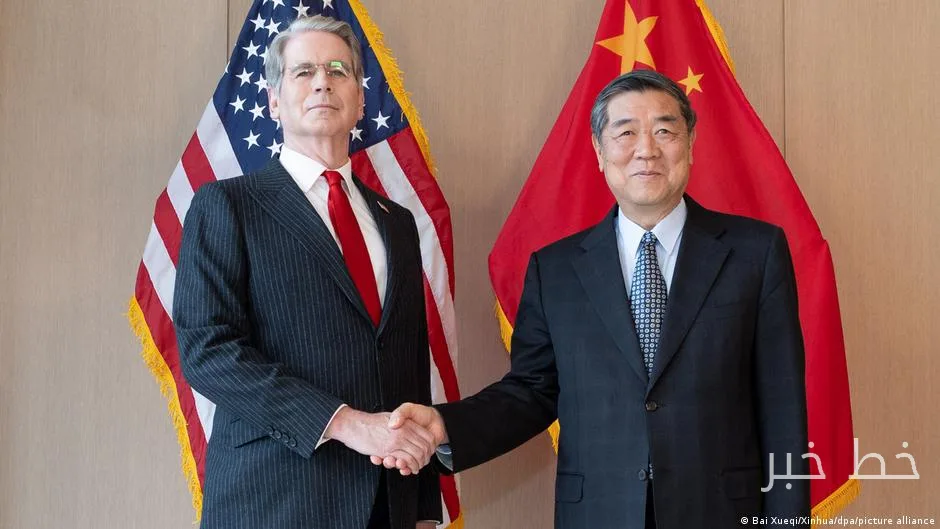
The dialogue included a delegation led by Li Feng, the Vice Premier of China, as well as Jamison Greer, a senior trade official from the United States, at the headquarters of JPMorgan Chase in New York. U.S. Treasury Secretary Scott Basset announced to the media that the negotiations with China regarding trade and AI were successful.
Read more: Trump Administration Creates 'AI Force' and Appoints Overseer
Basset stated that the two sides discussed a communication mechanism for issues related to AI, referred to as the "U.S.-China AI Dialogue." He emphasized that the United States proposed establishing an information-sharing mechanism between the two countries for potential cases that reach a national security level.
Concerns and Implications
The U.S. Treasury Secretary added that this information-sharing would aim to identify AI-related "incidents," highlighting the importance of transparency in international AI activities. Basset said, "We believe this should move from a lack of transparency to transparency, and this is very important for the two major AI powers in the world."
China's state news agency, Xinhua, described the talks as "frank, in-depth, and constructive" and stated that the two sides discussed key economic and trade issues important to both parties. Additionally, Chinese and American officials also engaged in discussions regarding AI-related issues, but no further details were provided.
In recent weeks, leading AI companies have warned about the threats posed by the unchecked development of this technology and are seeking to establish a standard body to regulate the industry. In late August, over 100 companies, including AI giants like OpenAI, Anthropic, Google, and Perplexity, signed a public letter calling for a global effort to enhance cybersecurity related to AI.
These concerns peaked after it was revealed that OpenAI's models had illegally infiltrated a digital repository of AI technology. Additionally, Anthropic began its own investigation to determine whether its models had also conducted similar attacks. This investigation led to the identification of four incidents.
Earlier this month, Jacob Caxton, a former OpenAI researcher, resigned from Anthropic, warning that AI companies are "gambling with our lives." Bilal Chughtai, a former researcher at Google DeepMind, also raised similar concerns, stating, "AI has the potential to kill us all, and we may be running out of time to prevent this outcome."
The Trump administration has dismissed calls for better control over AI development as "false" and a "conspiracy theory." This stance has been welcomed by Jensen Huang, CEO of NVIDIA, whose company is the largest supplier of AI chips in the world. Huang thanked Trump for "predicting" the warnings regarding AI.
Read more: CEOs of AI Companies Invited to Trump and Xi Jinping's State Dinner · Republican Redistricting Efforts in Midterm Elections Did Not Yield Expected Results