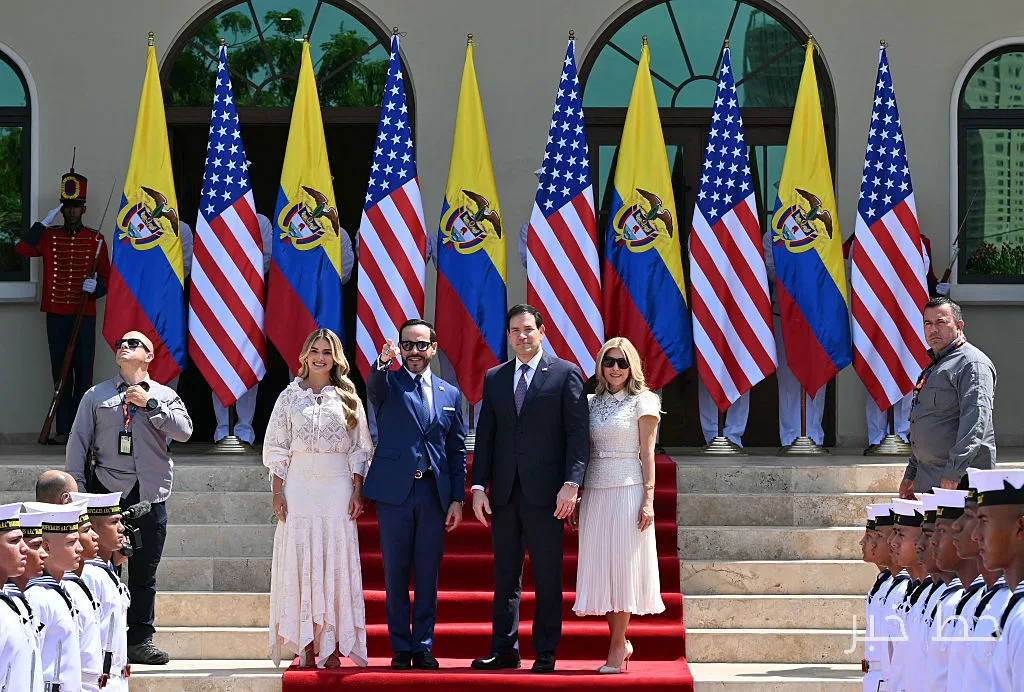
The Trump administration announced this week its intention to transfer 52 million dollars of its military aid from European and Middle Eastern countries to Latin American countries with right-wing governments.
Details of the Military Aid Transfer
A State Department official has confirmed that the department has informed Congress that this funding will be transferred to Colombia, Ecuador, Panama, and Peru, with the aim of "combating drug trafficking terrorism in its backyard and helping secure the Panama Canal." The State Department did not specify how much military aid to Middle Eastern and European countries will continue after this transfer.
Read more: Trump Administration: Allowing the European Union to Canada for Membership Could Be a Hostile Act
This shift in military funding reflects a broader change in U.S. foreign policy priorities. Since Trump returned to the presidency last year, his administration has sought to strengthen U.S. presence in the Western Hemisphere to combat drug trafficking from Central and South America and reduce the influence of other countries, including China, in the region.
Consequences of Foreign Policy Change
The Trump administration is also working to adjust its foreign policy regarding the Middle East and Europe. The national security strategy presented by the White House at the end of last year stated that the administration intends to adopt a less interventionist approach to armed conflicts in these regions and allow these countries to become militarily self-sufficient. The transfer of foreign military aid is the latest action in several moves by Trump to reduce forces and military funding in Europe during his second term.
Experts have warned that this change in military funding and broader plans to adjust U.S. foreign policy could weaken the country's alliances globally in the long term. Jim Townsend, who served as Deputy Assistant Secretary of Defense for European and NATO Policy in the Obama administration, says: "You are gradually and slowly eroding this trust in the United States. And then when you need them... well, you turn to a weaker country because you have reduced your aid to them."
On the other hand, the Trump administration's increasing support for right-wing countries in the Americas carries its own risks. Rebecca Bill Chavez, who served as Deputy Assistant Secretary of Defense for the Western Hemisphere in the Obama administration, says: "U.S. security relationships are things you build over time, and if they become just relationships with specific governments, that is dangerous."
During Trump's second term, military aid to Latin American countries has increased, and U.S. military presence in the region has also been strengthened. In January, the United States launched a military operation in Venezuela that led to the arrest of Nicolás Maduro, the former leader of the country. Maduro had previously been wanted in the United States on charges of drug trafficking and corruption.
Read more: Shift of Eight Electoral Districts in Favor of Democrats · Uncertain Future of the Kennedy Center After Closure by Trump