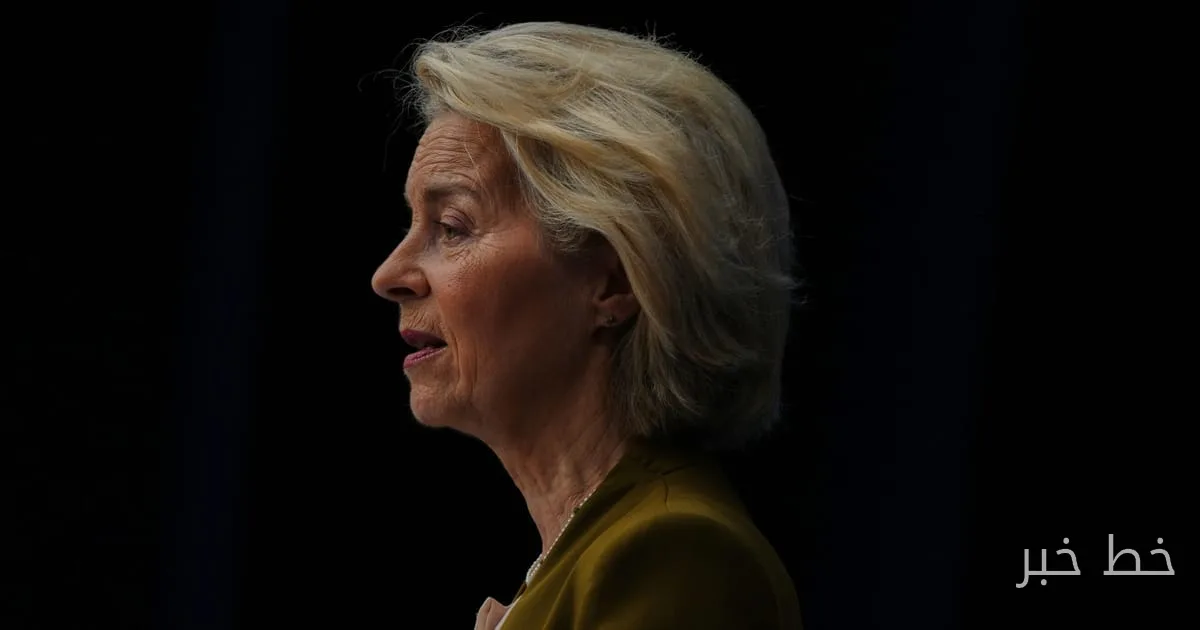
Ursula von der Leyen, President of the European Commission, announced on Thursday in Montreal that her goal is to elevate relations between the European Union and Canada to the "highest possible level." These remarks come as she seeks to propose 'associate member' status for Canada, although some European capitals had rejected the term just a day prior.
Plans for Deeper Cooperation
Von der Leyen's proposal was made ahead of a historic summit between the EU and Canada in Montreal, where she and Mark Carney, Prime Minister of Canada, are set to announce plans for deeper cooperation. This summit is taking place against the backdrop of rising autocracy globally and unpredictable relations with the U.S. government.
Read more: President of Finland Warns of a New Dark Era in Europe
In her speech at the C.D. Howe Institute, she said: "Canada cannot become a full member of the European Union because of geographical constraints, but we both want to elevate our relationship to the highest possible level." She added: "That is why we are discussing the idea of making Canada the first associate member of the EU."
Reactions to the Proposal
As soon as von der Leyen finished her speech, Friedrich Merz, Chancellor of Germany, announced that the EU and Canada are forming a "partnership for the future," without mentioning the associate member status. Germany has been one of the opponents of using this term, according to EU diplomats.
The President of the European Commission stated in her speech that discussions about associate membership would focus on deeper cooperation in areas such as artificial intelligence, climate policies, and energy. She also referred to strengthening joint cooperation between the European Commission and the Canadian government, as well as "parliament-to-parliament" and "court-to-court," referring to the Court of Justice of the European Union and the Supreme Court of Canada.
Von der Leyen emphasized that such a status would only be open to "our closest partners outside of Europe" who are willing to open a new border together and chart a path together. She said: "We cannot limit ourselves to the constraints of the old world order."
According to reports, EU countries have turned to softer language to describe the future relationship between the two sides after several days of negotiations, including the use of the phrase "partnership for the future" proposed by the Canadian side, as well as "a closer connection... without full membership."
EU diplomats have pointed out that while capitals support the overall goal of getting closer to Canada, they are cautious about offering a status that has never been proposed and whose legal lines are still unclear. Germany had previously proposed associate member status for Ukraine, but that effort was rejected.
In response to reports that EU countries intend to set aside the term "associate member," Carney said: "The good news is that specific names or terms do not matter. What matters is the difference that this status will make in the lives of Canadians... and Canada, as a more independent nation with greater sovereignty, will be able to live its life in the way it chooses."
Carney and von der Leyen view this summit as part of broader efforts to deepen relations at a time when both Ottawa and Brussels are at odds with the Trump administration. Von der Leyen warned in her speech that "the international order is in decline."
Read more: Frontex Introduced as a European Return Agency with New Powers · Intensification of Tobacco Lobbying in Brussels as the EU Revises Regulations