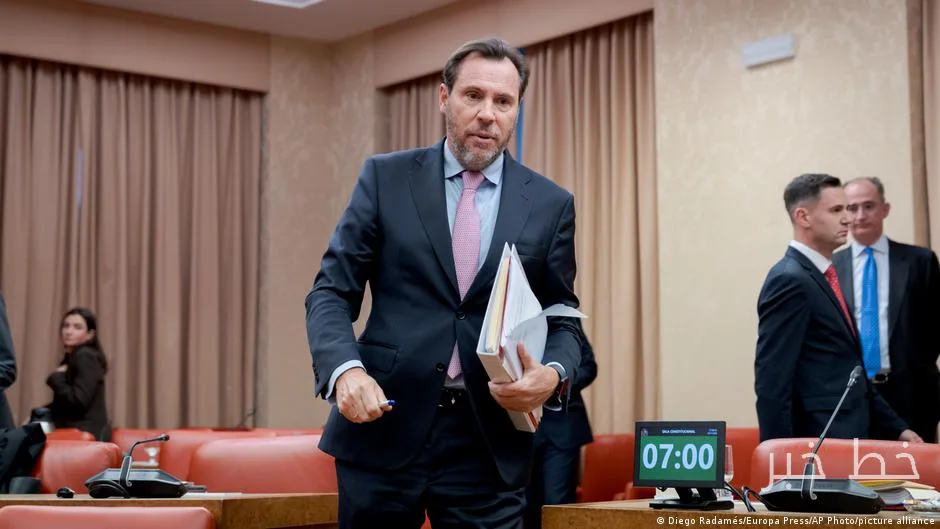
Óscar Puente, Spain's Minister of Transport, announced his resignation on Tuesday following one of the worst rail disasters in Europe in recent years, which left 69 dead last week.
Rail Disaster and Its Consequences
This disaster is the second deadly rail accident in Spain in less than a year, raising concerns about railway safety and increasing political pressure on Prime Minister Pedro Sánchez ahead of the parliamentary elections on November 29. In January, a train accident in the southern Andalusia region killed 46 people.
Read more: Europe Supports the International Criminal Court
Reasons for Resignation and Safety Measures
While announcing his intention to resign, Puente told representatives: "A transport minister in a country like Spain cannot remain in office with two accidents of this severity in less than a year." He also announced that he would withdraw his name from the list of parliamentary election candidates. He did not specify the exact timing of his departure from the position.
Puente's political rivals had called for his resignation, and railway unions were dissatisfied with him, feeling that he had shifted the blame onto one of the railway control center operators instead of accepting responsibility.
Hours before his speech to representatives, Puente presented new safety measures for the rail network and stated at a press conference that the government would "work hard to restore public confidence in high-speed rail." These measures include software for the control center that issues automatic alerts and makes it easier to detect traffic anomalies.
Another measure Puente mentioned was the requirement for decisions to be confirmed by a second operator in scenarios involving a malfunctioning automatic safety system.
The accident occurred during the failure of an automatic safety system that had stopped all trains on a 63-kilometer route between Madrid and Seville. Despite the halt on this line, a control center allowed a high-speed train operated by the state railway company Renfe to continue its journey.
The Renfe train collided with a train belonging to the private Spanish company Irio outside the village of Orda in the province of Toledo.