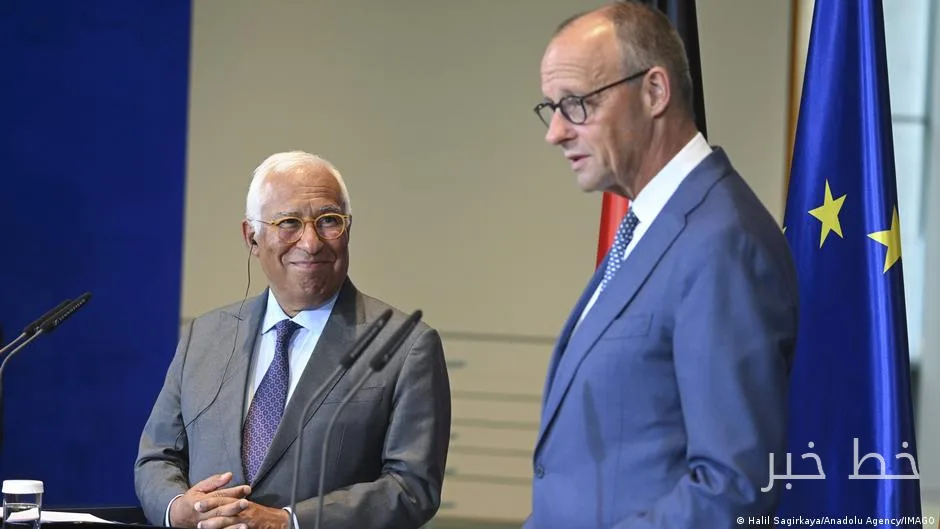
Friedrich Merz, the Chancellor of Germany, and his counterparts from five other countries have threatened to withhold approval of the proposed EU budget unless significant cuts are made. This announcement comes as the seven-year budget of the EU for the years 2028 to 2034 is set to be approved.
Details of the Proposed Budget
The proposed EU budget, estimated at around €2 trillion ($2.33 trillion), requires approval from all member states. This proposal is significantly higher than the current budget set for the years 2021 to 2027. Merz and other leaders from the Netherlands, Sweden, Denmark, Austria, and Finland have stated in an official letter that they will block it if fundamental changes are not made to the budget.
Challenges in the Budget
In his recent statements, Merz emphasized that "high debts pose a threat to our sovereignty and ability to act" and added that governments must painfully determine their priorities. The Chancellor of Germany has expressed concern over this issue and called for a shift in the EU's financial priorities towards competitiveness and defense. He also noted that a "20th-century budget" cannot address current challenges.
Given Germany's role as the largest economy in the EU, it has the largest share in financing this budget. EU funding primarily comes from the national contributions of member states, calculated either nationally based on gross national income or as a percentage of national tax revenue.
Meanwhile, coalition negotiations are ongoing in the state of Mecklenburg-Vorpommern. The Social Democratic Party (SPD) is set to meet with the Greens and the Left Party to discuss forming a government. This coalition is seen as the only option to prevent the far-right party "Alternative for Germany" (AfD) from coming to power in this state.
The AfD won the elections in this state with 38.2% of the votes, but has no option to govern as none of the other parties are willing to cooperate with it. The SPD, which has long governed in this state, came in second with 35.5% of the votes.