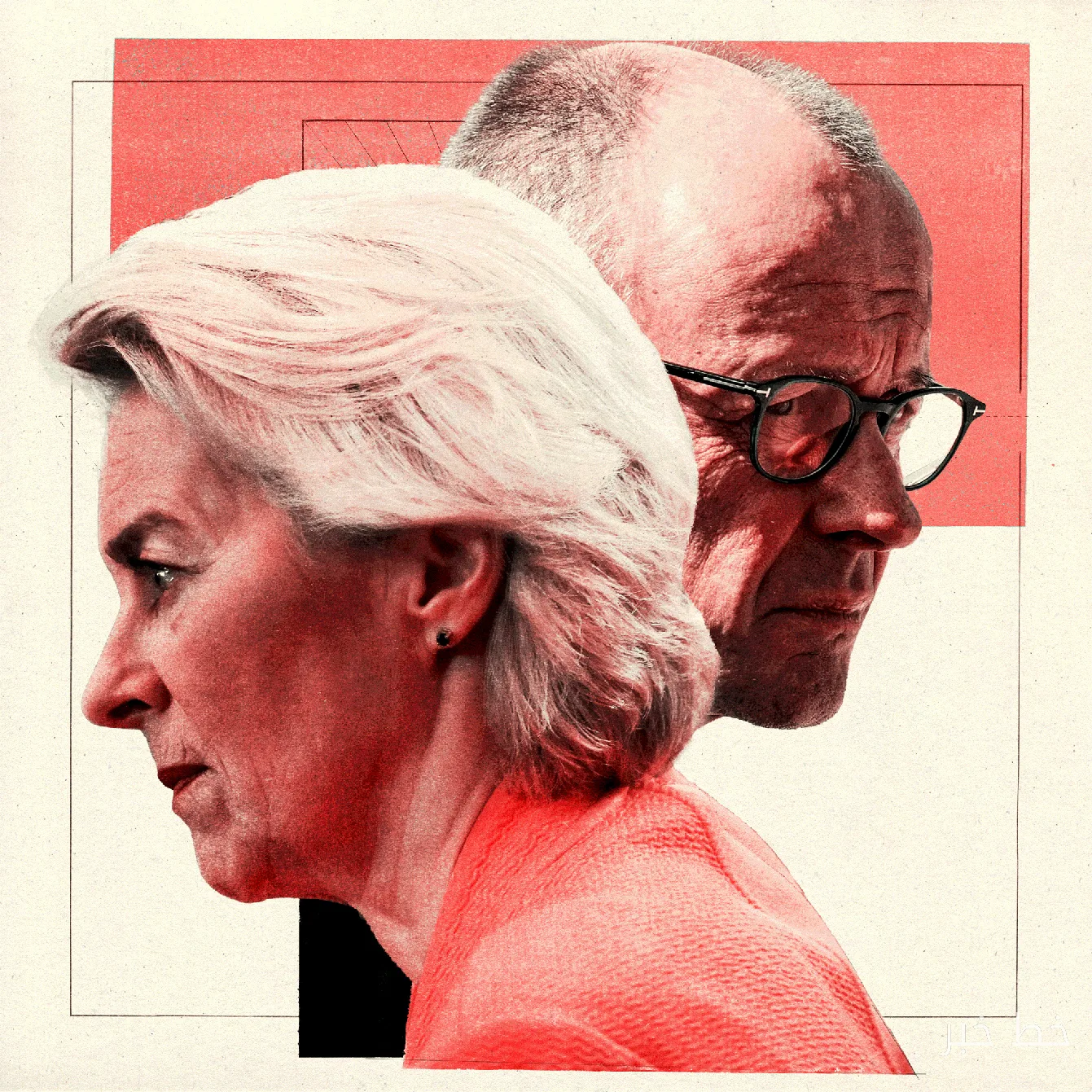
The disagreement over the naming of future EU relations with Canada has created a deeper rift between Ursula von der Leyen, President of the European Commission, and Friedrich Merz, Chancellor of Germany. This conflict, which diplomats say clearly indicates growing changes in the management of this bloc, also fuels other fundamental issues.
Germany's Opposition to the Proposed Commission Budget
Berlin has stated that it will not approve the proposed long-term budget of around €2 trillion without reducing "hundreds of billions" from it. This budget includes von der Leyen's plan to create a European Security Council, which has not garnered the necessary support in Germany. Instead, the German government has turned to a separate format with France and the UK for sensitive issues related to Ukraine.
Read more: Aleksandar Vučić Criticizes Rivals After Electoral Defeat
Ideological Clash Between Berlin and Brussels
This conflict represents an institutional dilemma between Brussels and Berlin. John Teckau, head of the Eurasia Group in Germany, believes that von der Leyen has adopted a highly integrationist approach to the EU, while Merz has completely distanced himself from this approach and points to nation-states as the main actors in EU policy. This challenge affects not only relations with Canada but also other fundamental issues including the EU budget and security.
German diplomats have emphasized that Berlin and Brussels have shown no willingness to compromise on the issue of "associate member." In a meeting of EU ambassadors, Berlin reiterated its opposition to this issue, while the Commission President shows no inclination to abandon this term. One individual familiar with von der Leyen's thoughts stated that she seeks to strengthen relations based on principles established in the previous meeting.
Differences in Defining Associate Member Status
The main difference pertains to the precise definition of the status of "associate member." Diplomats stated that von der Leyen's definition of this term for Canada prevents this status from being granted to Ukraine as well. Instead of a middle stage for entering the EU, the associate member status is given to a country that can never fully join the EU, as von der Leyen pointed out in her speech in Montreal.
Teckau noted that Berlin and Brussels overlap on many ideological issues, including party affiliation, as both belong to the Christian Democratic Union of Germany. However, the issue of Canada has manifested itself in a particularly dramatic way. While von der Leyen sees this issue as a significant geopolitical achievement, Merz has responded negatively to the expectations of those in Brussels who hoped she would adopt a more integrationist approach to the EU.
Fundamental Challenges in Managing the EU
According to Teckau, the dispute over terminology represents broader discussions that exist throughout the fundamental debates including the EU budget and security: whether the EU should be more influenced by its common institutions or led by its national governments. He described this issue as "insoluble" in many respects.
The views and positions of both sides in this dispute reflect the complex political situation in Brussels and Berlin and the challenges facing the EU in addressing key global issues.
Read more: Merz Emphasized Russia's Lack of Seriousness in Ukraine Ceasefire Talks · Canada and the EU Seek to Strengthen Cooperation Without Provoking the US and China