Bill McKibben, author and environmental activist, and Catherine McKenna, former Minister of Environment and Climate Change of Canada, along with several other prominent figures, have called in a public letter for solar energy to be provided for all individuals by 2030. This letter comes at a time when climate crises and wars are escalating globally, and the need for clean and accessible energy is increasingly felt.
The Need for Clean Energy
The letter urges governments, businesses, institutions, and the general public to take action to provide clean and affordable energy for one billion people who still lack access to electricity. It also refers to billions of others who are paying high costs for polluting fossil fuels.
McKenna stated in an interview, "This is a big goal, but the progress we have made in solar and renewables has exceeded expectations. So let's continue this trend." According to analyses by Ember Energy Institute, solar energy is expected to grow by 30 percent in 2025 compared to the previous year and has increased more than tenfold since 2015.
Rapid Development of Solar Energy
McKenna also noted that solar energy is the cheapest source of electricity in the history of the world and that this technology is growing rapidly. She pointed to the decreasing costs of batteries for storing renewable energy and said, "We have the necessary technologies to transition to solar energy, and there is sufficient financial support for it."
In 2025, for the first time in 100 years, renewable energy sources surpassed coal in the global electricity mix. Currently, the installed capacity of solar energy worldwide has reached 3 terawatts. Each terawatt is equivalent to 1000 gigawatts, and a nuclear power plant has a capacity of 1 gigawatt. Currently, the world produces about 1 terawatt of new photovoltaic capacity annually, most of which is in China.
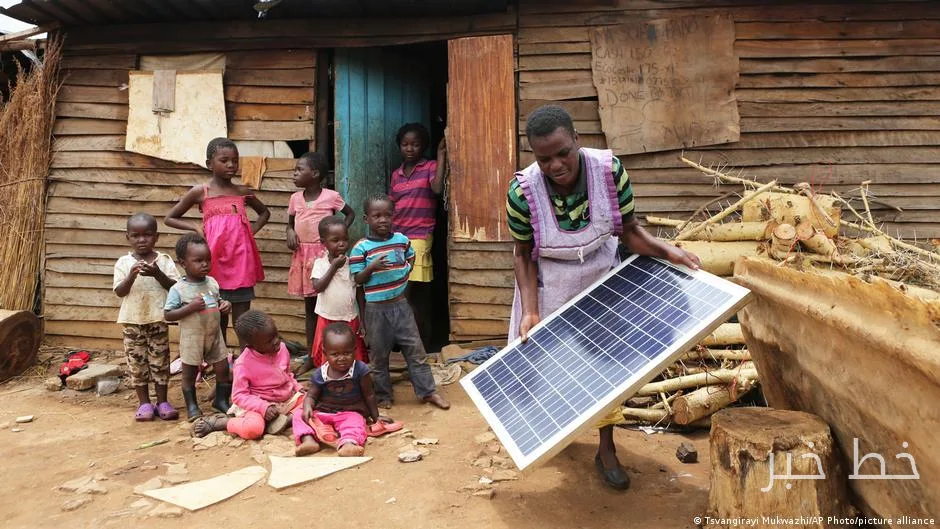
McKenna pointed out that about 655 million people still lack access to electricity, and to achieve universal access by 2030, the pace of electrification in Africa must triple. She added, "Off-grid areas can directly transition to clean technologies without needing fossil fuels that contribute to global warming."
Hans-Josef Fell, recognized as a pioneer of renewable energy, said, "If global energy demand is fully met through renewable sources, solar energy will account for about 60 to 70 percent of the supply. The rest comes from wind and other sources." He also mentioned countries like China and Pakistan that have made progress in this area.
Fell emphasized that political and social will is essential to achieve a global energy transition. He said, "If we as a global community address this issue properly and work on it, we might really achieve it. Even if we only achieve 90 percent of this goal, it would still be an amazing accomplishment."
McKenna stressed the need for blended financing and called on governments, the World Bank, and the private sector to invest in this area. She said, "Continuing down the path of fossil fuels is unreasonable; it is an outdated technology with unacceptable costs, risks, and impacts."
Read more: Swiss glaciers have melted significantly in the first eight months of 2026