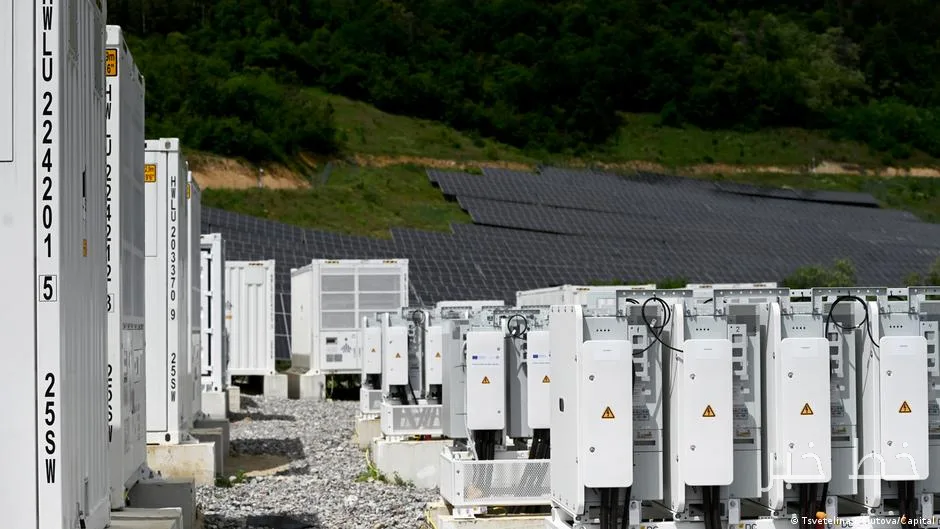
Bulgaria, a country in Southeast Europe with a population of nearly 6.4 million, has become one of the leading countries in battery storage in the world. In less than two years, the country's battery storage capacity has increased from zero to nearly 25 percent of the total installed electricity generation capacity, resulting from close to 3 billion euros (3.4 billion dollars) in funding from European Union resources and private investments.
Impacts of Summer 2023
Last summer, Bulgaria escaped the worst conditions with extreme temperatures and droughts that led to reduced nuclear and hydroelectric power generation in Hungary and Romania. During this time, Bulgarian batteries became one of the key tools for network stability for neighboring markets, being sold during peak evening consumption hours with stored cheap solar electricity.
Read more: U.S. Congress Seeks to Improve Conditions for Working Families
Rapid Growth of Storage Capacity
According to reports, Bulgaria's battery capacity was estimated to be 1.66 gigawatts in January 2026, but just eight months later, this capacity more than tripled to 5.4 gigawatts. The Bulgarian Ministry of Energy has announced that this capacity has reached 5.7 gigawatts. Ivaylo Stantchev, editor of the economic publication “Capital,” says that two years ago, no one thought we would even have half of this capacity.
Stantchev has compiled one of the most comprehensive lists of battery projects in the country, reflecting investment levels beyond official forecasts. This rapid growth has been due to the financing of Next Generation EU recovery programs and RESTORE programs, which have funded 113 projects with 700 million euros (797 million dollars).
Although most lithium batteries are sourced from China, investors are primarily from Bulgaria or other European countries that believe in the potential of this growing market. Stantchev states, "When the batteries are fully charged, they can store enough energy to supply the entire country for several hours." This comparison, although practically impossible, illustrates the scale of this development.
Given that Bulgaria has historically been a net exporter of electricity, it has now become a battery storage hub in the region, with its storage capacity exceeding the combined capacities of Greece and Romania. Despite the fact that household electricity prices in Bulgaria have not yet decreased due to fixed prices set by the government, industrial companies have benefited from this change.
Read more: Poll Shows Nearly Half of Young Voters Have a Negative View of Capitalism · White House Has No Plans to Ban Diesel Exports