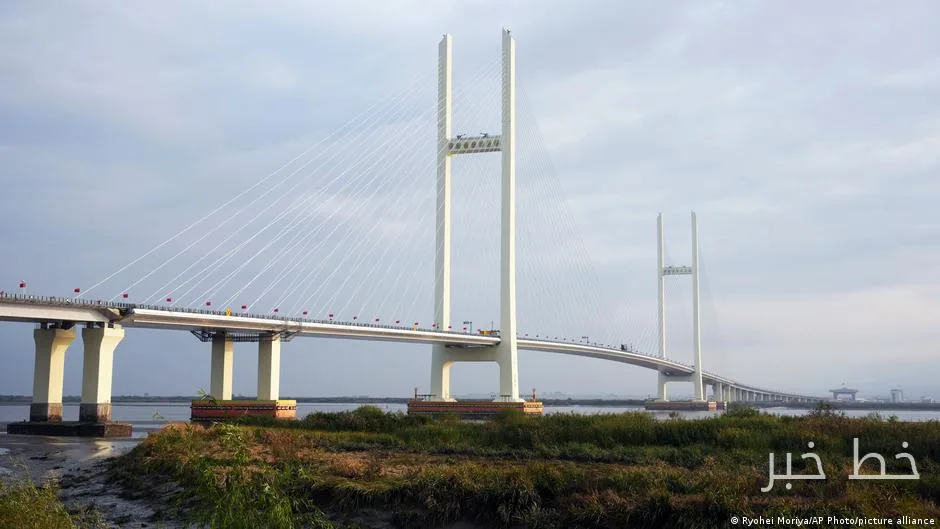
On Thursday, China and North Korea opened a new border bridge, which is considered one of the most important land crossings between the two countries. This move aims to revive trade and economic relations after years of tension and disruptions.
Details of the Opening of the New Yalu Bridge
During the ceremony, the new Yalu Bridge located at the border of China and North Korea was officially inaugurated. According to Chinese state media, this bridge, which was completed in 2014, had remained unused until now due to the lack of connecting roads on the North Korean side. Images of trucks decorated with the national flags of China and North Korea were displayed on this bridge.
A large crowd gathered on the Chinese side of the bridge in the city of Dandong to watch the ceremony. Meanwhile, in the city of Sinuiju in North Korea, work on the roads leading to the bridge remains unfinished. This bridge is seen as a sign of improved relations between Beijing and Pyongyang, especially after two meetings between the leaders of the two countries last year.
Economic Implications and Bilateral Cooperation
Li Qiang, the Prime Minister of China, stated in a video message during the bridge's inauguration: "Bilateral relations have entered a new stage and a new chapter has begun." He added that this border crossing will significantly promote economic and trade cooperation and strengthen exchanges between the people of the two countries.
Ahn Chan-il, a researcher from North Korea, expressed expectations that hundreds of vehicles would cross this bridge daily. He said: "This bridge can serve as a channel for the influx of goods and abundant resources from China into North Korea, greatly assisting the economy of this country."
However, experts believe that North Korea remains cautious about becoming more dependent on China. Ryuem El-chul, an expert at the Institute of East Asian Studies at Kyungnam University, said: "This bridge is unlikely to immediately lead to a full return of trade to pre-sanction levels, but it will help facilitate the movement of heavy equipment and raw materials that North Korea needs for development."
China is significantly North Korea's largest trading partner, despite multiple sanctions from the United Nations prohibiting the movement of goods and workers to North Korea due to the country's missile and nuclear weapons programs.