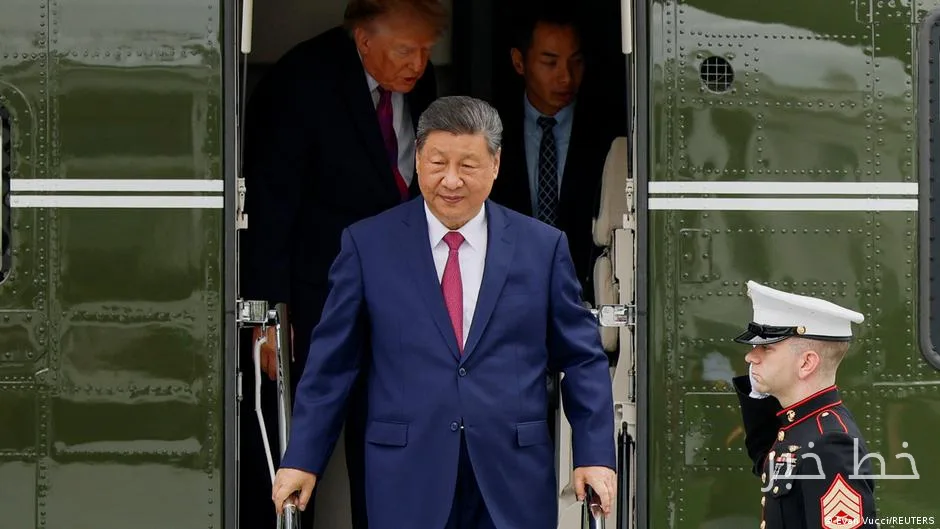
Donald Trump, the President of the United States, welcomed Xi Jinping, the President of China, at Andrews Air Force Base on Wednesday. This action, which rarely occurs in the history of U.S. diplomacy, reflects the importance of Trump's personal relationship with Xi as a powerful leader in China. The 90-minute meeting took place in the Oval Office of the White House, and afterwards, Trump took Xi to view the White House construction projects.
Meeting Ceremonies and Expressions of Friendship
During this meeting, Trump said, "We had a great session" and added that Xi "likes a good granite stone." Following this, a formal and lavish dinner was held where Trump announced that he and Xi "have never gotten along better" and emphasized the importance of building relationships that bring prosperity and security for future generations.
Read more: U.S. and China Agreement to Extend Trade Ceasefire Until January
Challenges Facing Bilateral Relations
However, it seems that Xi Jinping does not share Trump's enthusiasm in this regard. During Trump's previous visit to Beijing, Xi sent his Vice President Han Zheng to welcome Trump instead of himself. Aurel Liu Insisa, a senior analyst at the Mercator Institute for China Studies, describes this type of personal diplomacy by Trump as a one-sided structure that exists more in Trump's mind than in reality. He states, "There is little evidence to suggest that these personal relationships impact U.S.-China relations."
Xi's visit to the United States, his first in 10 years, was largely focused on ceremonial aspects and did not seem particularly effective in content.
Trade Issues and the Future of Relations
The main issue remains the management of the trade war that Trump initiated with his tariffs in April 2025. On Wednesday, U.S. Treasury Secretary Basant announced that the trade ceasefire, which was set to end in November, would be extended until January to allow more time for negotiations on economic issues. This extension was anticipated and is dependent on the "Busan Deal" that Trump and Xi reached in South Korea last October.
Currently, agreements and negotiations are underway through the "U.S.-China Trade Delegation" announced in May. U.S. Trade Representative Jamison Greer has stated that this delegation is active, and the initial list of possible items includes U.S. agricultural products and low-tech goods from China.
However, reports indicate that agreements on tariff reductions have yet to materialize, and the failure to achieve these agreements is expected to signal serious problems in the negotiations.
Read more: Marco Rubio Made Trips to Colombia, Ecuador, and Peru · Jim Copenhaver Died Following Shooting at Trump Campaign Rally