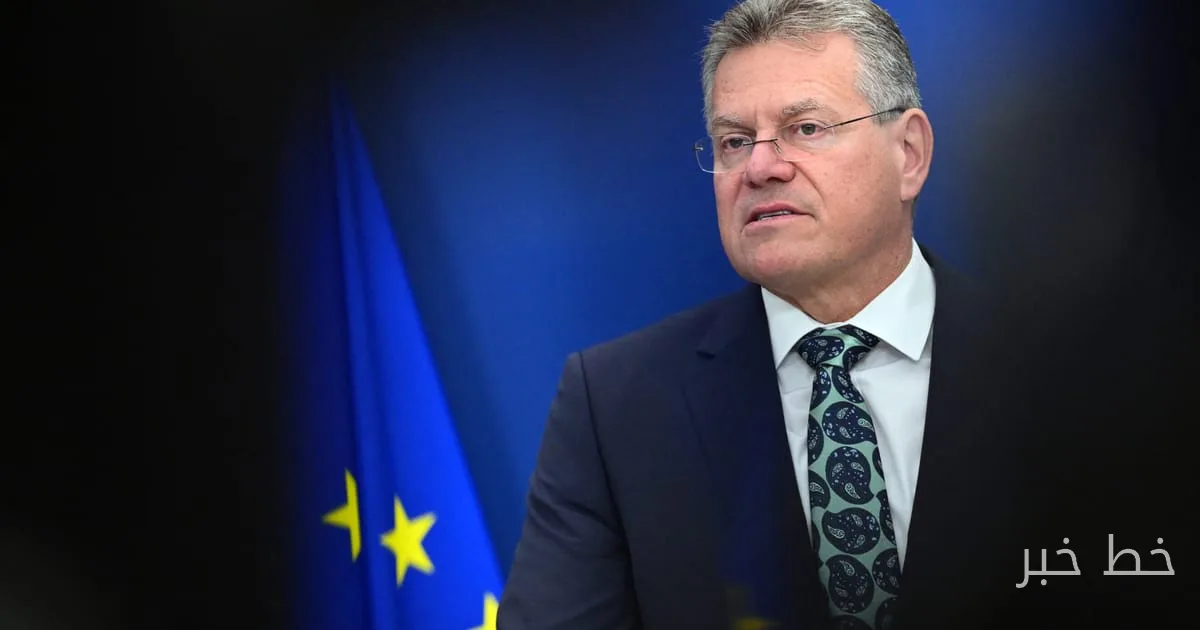
Commissioner Maroš Šefčovič announced that trade negotiations between China and the European Union have not yet yielded results, stating, "We certainly have not reached that point yet." He described these negotiations as "constructive but tough" and emphasized the political pressure to find a common agreement with Beijing.
Political Pressure to Find an Agreement
Šefčovič, in a side interview at the G20 trade ministers' summit in Milwaukee, said: "I feel that there is a high political interest, and of course, there are very high expectations from the leaders of the entire European Union." He also pointed out that European leaders are eagerly awaiting tangible results from these negotiations.
Šefčovič is set to travel to Beijing on October 8 to meet with Chinese Commerce Minister Wang Wentao. He described this meeting as "a very critical meeting" and expressed hope that this trip would lead to positive outcomes. He added, "We must believe that we can achieve something; otherwise, it's better not to go."
Negotiations and Existing Challenges
Šefčovič is seeking to deliver results that can be presented at the EU leaders' summit in Brussels on October 15-16. He had previously stated that Brussels is prepared to restrict China's access to the EU market if the negotiations fail. Negotiations between the EU and China have been ongoing since June, and EU leaders have declared that they can no longer tolerate the flood of Chinese imports that inundate the single market and pressure domestic producers.
Šefčovič said, "I think our Chinese partners have realized that this issue directly impacts the future of iconic European companies and genuinely affects thousands of jobs." This negotiation also relates to social issues and the social model that has developed in Europe over decades.
The EU's trade deficit with China, which has reached one billion euros per day, is at the center of these negotiations. Reducing this deficit requires either a decrease in imports from China, an increase in EU exports, or a combination of both.
Šefčovič expressed hope that he would bring back "evidence of the concept" from Beijing addressing three main issues: the sudden increase in Chinese exports in key industrial sectors, tangible ways to increase European goods exports to China, and long-term transparency regarding China's export restrictions on raw materials, especially rare earth elements.
During his time in Milwaukee, Šefčovič met with Li Chenggang, the Chinese Vice Minister. He stated that China understands Europe’s concerns well. "All our issues are on the table. I am not saying we have clear guarantees for resolving these issues, but they are on the table."
Advisors from both sides are dividing bilateral consultations into four working areas: trade and investment balance, export controls, intellectual property rights, and reform of the World Trade Organization. A source familiar with the negotiations, who wished to remain anonymous due to the sensitivity of the matter, stated that the Commission is seeking an agreement with China that includes bilateral agreements on specific categories of products while imposing unilateral restrictions on other categories.
The Commission will present the results of the negotiations at the mid-October summit to the EU leaders, who will then decide whether the results are satisfactory. French President Emmanuel Macron criticized China on Wednesday for unfair subsidies to its domestic producers and urged the Commission to take more protective measures to support the European industry.
China has also shown that it is ready to respond to pressures. In response to a Franco-German position paper expected to call for enhanced EU trade defenses, a spokesperson for the Chinese Ministry of Commerce stated that China would take "decisive action" against any measures to restrict goods from entering the European single market.