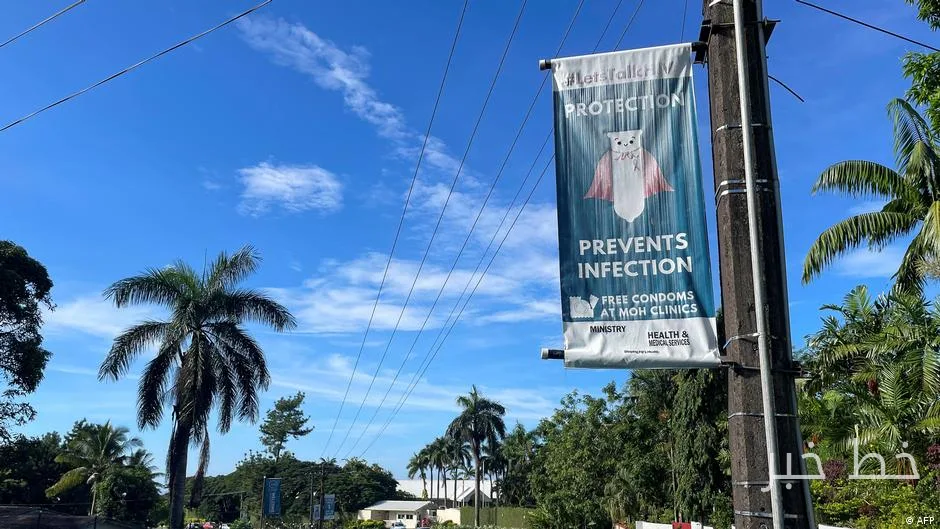
Fiji has declared HIV a national health crisis and is seeking a comprehensive government response to address the significant increase in cases of this virus. The Pacific island government announced that in 2025, 2016 new HIV cases were identified, which is a 16-fold increase compared to 2019. These figures indicate the spread of the virus beyond high-risk groups such as drug users and sex workers to the general population.
Increase in HIV Prevalence in Fiji
The Fijian government announced that the prevalence of this virus among adults has nearly tripled in the past five years. Currently, it is estimated that one in every 60 adults in the country is infected with HIV, whereas five years ago, it was one in every 167. Among pregnant women, two out of every 100 are infected with HIV, and in 2025, 59 babies were born with HIV, 18 of whom died before their first birthday.
Read more: The Dangers of Entering the House with Shoes and the Resulting Contaminations
Government Actions to Address the Crisis
The government also announced that broader testing will help health services reach more individuals and identify cases that may have previously gone undetected. Ratu Atonio Lalabalau, the Minister of Health, along with four other ministers, will form a subcommittee to help remove barriers for swift action.
The government based in the capital and port city of Suva announced that it will expand access to free HIV testing, prevention, and treatment services. This includes rapid testing, preventive medications for high-risk individuals, harm reduction measures for those who inject drugs, and free treatment for those living with HIV.
The government acknowledged that this response focuses on saving lives, improving access to health services, and reducing social stigma. Fiji is also benefiting from the support of international partners including Australia, New Zealand, India, the Global Fund, and the United Nations. The country reminded people that testing is free and confidential nationwide, and knowing one’s HIV status allows individuals to take informed actions to maintain their health and that of others.
UNAIDS in Geneva responded to this action and welcomed Fiji's decision to accelerate its response. Winnie Byanyima, Executive Director of UNAIDS, stated, "Fiji has urgently recognized this situation and is ramping up its response. It also reminds us that AIDS is not over. HIV epidemics can change rapidly, and countries need health and social systems ready to respond immediately."
This international organization reported that among known transmission cases in Fiji, more than half are related to sexual transmission, and over 42 percent are linked to injecting drug use. UNAIDS estimated that between 2010 and 2025, new cases will increase 12-fold. It also stated that among an estimated 9,100 people living with HIV in 2025, only 39 percent are aware of their HIV status, and only 22 percent are using antiretroviral treatment.
However, given recent medical advancements and increased treatment efficacy, the organization stated that there is still an opportunity to change the course of this epidemic. Ayman Murphy from UNAIDS said, "Declaring a national crisis is a call to action, not fear. HIV is not transmitted through everyday contact, and individuals who are effectively treated and have an undetectable viral load do not sexually transmit HIV."
The UNAIDS country director for Fiji, Renata Ram, told AFP that the transmission rate has started to increase since 2019, when a group of very high-risk drug users, especially in the sex worker community, emerged. Pacific islands like Fiji have become transit hubs for drugs from Latin America and Asia to lucrative markets in Australia and New Zealand, which has also led to increased drug use within the islands themselves.
Read more: Alison MacDonald Ends Her Work Alongside Senator Jean Shane · Health Insurance Holders Still Face Medical Debt