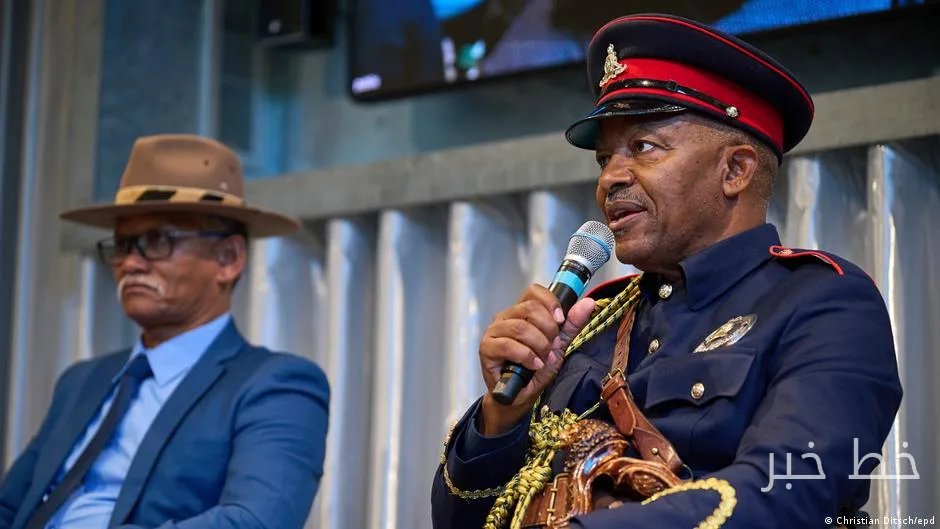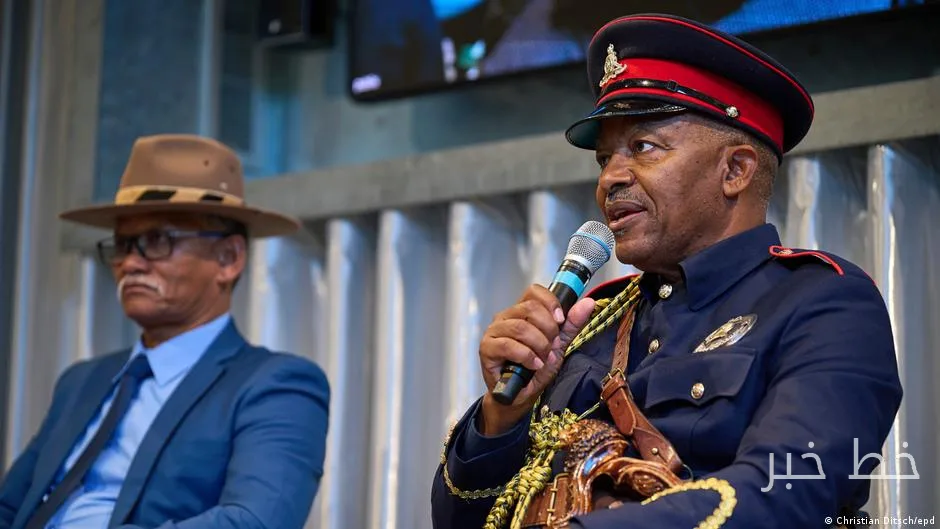
Greg Stanton (Gaob D. Timotheus Frederick) was seated this week in the front row of the visitor gallery in the Bundestag. He had traveled from Namibia, dressed in a suit and hat, to witness this parliamentary debate. His family has been waiting for nearly 120 years for the return of the human remains of their ancestor, Cornelius Frederick, who led the Nama resistance against German colonial rule.
Call for Unconditional Apology
Greg Stanton was present here on behalf of his ancestors and as a member of the Nama Traditional Leaders Association (NTLA) to demand an unconditional apology from Germany. Next to him, Mutjinda Katjua, the head of the Ovaherero Traditional Authority, sat in formal attire and white gloves. Before the Bundestag debate, he said: "We ask the Bundestag to clearly recognize the genocides committed against the Ovaherero and Nama people."
Read more: The Refugee Does Not See War and Negotiation as Incompatible with National Interests
Lack of Political Will in Germany
According to Jürgen Zimmerer, a historian at the University of Hamburg, the Bundestag and the German government lack the will to confront this part of their history. He added: "If there were political will for this, it could progress quickly."
The Social Left Party initiated this discussion by drafting a resolution for full recognition and reparations. Katjua rejected the existing agreement between the governments of Namibia and Germany, stating: "Development aid cannot replace comprehensive reparations."
The Foreign Ministry also warned: "Legal claims for reparations cannot stem from the recognition of genocide."
According to Zimmerer, financial calculations are also involved in the payment of reparations. He emphasized: "If we want to compensate the families of the victims, it could lead to bankruptcy."
In the coalition agreement of the current German government, only four lines in 144 pages refer to the government's commitment to reconciliation with Namibia. The text states: "We will intensify our efforts to confront colonialism."
However, some political experts believe that the issue of colonialism has been sidelined compared to the efforts of the previous government. Zimmerer also pointed out this issue, stating: "The government is regressing in raising awareness of colonial injustices."
Generations of Ovaherero families are seeking to heal these wounds, and it is estimated that tens of thousands of human remains still exist in Germany.
In March, the government established a coordination council headed by the Foreign Ministry and announced that it does not want to dictate to source countries which cultural artifacts and human remains should be recovered.
Read more: Two Leaders of the Cockroach Movement Arrested for Judicial Interference · Bir Bel Bas Resigned from All His Positions