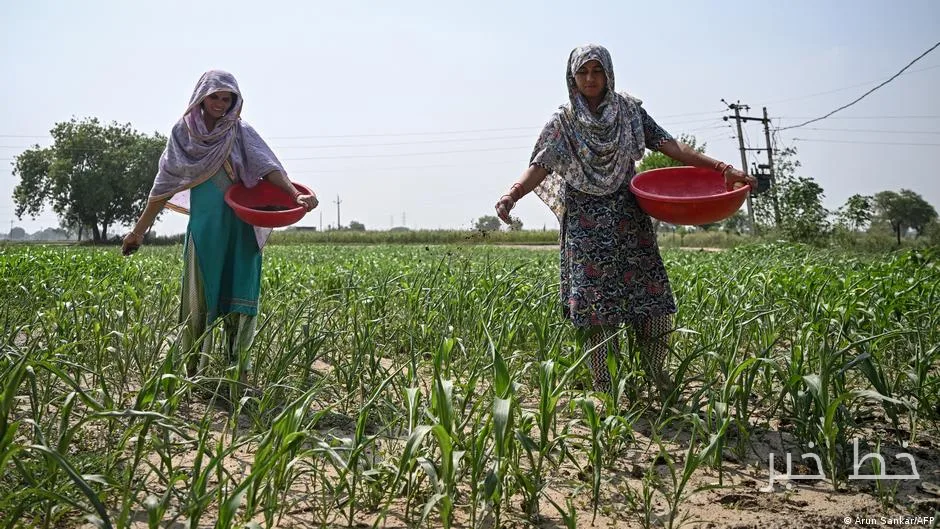
Ramesh Reddy, a 44-year-old farmer from the Kolar district in Karnataka, had invested all his savings in his 3.5-hectare tomato farm. He spent 320,000 rupees (equivalent to 3,000 euros) on this project and borrowed 250,000 rupees at 24% interest, secured against his wife's gold.
The harvest was supposed to repay the loan and cover his son's university expenses. However, the irrigation well on his farm dried up, and within three weeks, the tomato plants perished, leaving Reddy unable to save even a single box.
Impact of Weak Monsoon on India's Economy
In India, the monsoon is not just a four-month rainy season; it is vital for replenishing water reserves, supporting agriculture, and providing water and electricity across the country. Nearly half of India's workforce is dependent on agriculture, which is always faced with economic challenges.
This year, India received only 759.4 mm of rain between June and September, which is a 12.6% deficit compared to the long-term average of 868.6 mm. This shortfall has made this monsoon the driest in the last 11 years.
Water and Power Shortages and Their Effects on Households
The lack of rain has damaged India's water and energy systems. The country's main reservoirs had less water than usual after the monsoon, posing challenges for farmers and the energy sector. Data shows that hydropower generation in September decreased by 16% compared to last year.
The government has instructed some private power plants to operate at maximum capacity and send extra electricity to the grid. However, producers are currently feeling the pressures, and power outages have negatively impacted production cycles.
Arun Kumar, a retired economics professor, says that the economic impacts of a weak monsoon can extend beyond economic numbers and pressure rural incomes and consumption. The current situation can be described as a "twin shock" for rural households, as agricultural incomes have decreased while food prices have risen.
Forecasts for the rabi season have also been severely affected, and farmers must pay attention to how much soil moisture remains. In the context of climate change, predictions for the future are becoming more challenging.
Read more: Decrease in American Support for Businesses' Public Stances