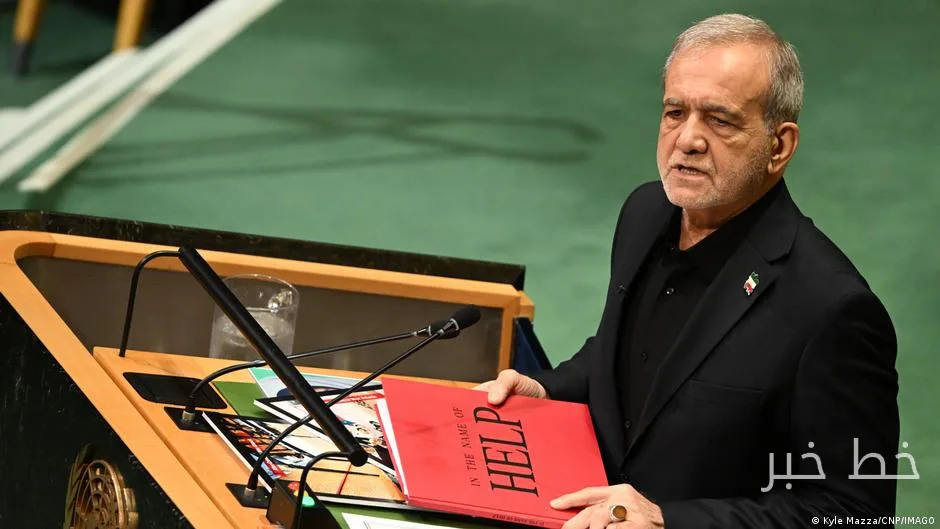
Iran's President, Masoud Pezeshkian, during his trip to New York for the United Nations General Assembly, met with American journalists and media representatives. In this meeting, he announced Iran's readiness for reconciliation on the nuclear issue with the United States and emphasized the importance of adhering to international commitments.
Nuclear Developments and Iran's Position
Pezeshkian, in an interview with an American news network, responded to questions about whether Iran is ready to surrender its enriched uranium. He noted that his country would adhere to its obligations under international law and the Nuclear Non-Proliferation Treaty. This comes as the International Atomic Energy Agency (IAEA) estimates that Iran has more than 440 kilograms of uranium enriched to 60 percent.
Read more: The President of Serbia Criticized the War Crimes Court's Ruling on Kosovo
Pezeshkian emphasized that Iran has never sought nuclear weapons and referred to the religious fatwas of its leader, which deem the use of weapons of mass destruction as impermissible and unethical. These statements come as the IAEA has indicated that Iran's enrichment of nuclear materials exceeds what is necessary for civilian use.
Prospects for Diplomacy and International Relations
Despite Pezeshkian's statements, experts predict that a significant breakthrough in Iran-U.S. relations will not occur soon. Arman Mahmoudian, an expert on Iranian affairs, believes that Pezeshkian lacks the power to initiate comprehensive de-escalation with the United States, and hardliners and the Islamic Revolutionary Guard Corps have a significant influence on Iran's decision-making process.
However, Mahmoudian believes that Pezeshkian's trip could help establish more direct communication channels between Tehran and Washington. He also mentioned the possibility of creating a framework for future negotiations in New York, stating that both sides could develop a roadmap for more fundamental dialogues.
In this context, Iran's Foreign Minister, Abbas Araghchi, has reported on Tehran's proposals to Washington for resuming negotiations. In this proposal, the reopening of the Strait of Hormuz is possible within seven days if specific conditions are met. It is still unclear what these conditions are, but Iran has previously called for the release of frozen assets and an end to the maritime blockade.
The Strait of Hormuz, through which about 20 million barrels of oil pass daily, has become one of Iran's significant sources of influence. Experts believe that the United States has not been able to eliminate all of Iran's capabilities to threaten transportation in this strait, while U.S. attacks on Iran's navy and defense industry have caused serious damage.
In conclusion, Mahmoudian pointed to the likelihood of continued negotiations between Iran and the United States, either directly or through intermediaries, adding that Iran has come to understand that the current situation, with military threats and economic pressures, is unsustainable.
Read more: Former British Prime Ministers' Meeting on Life After Power · Iran Conveyed Its Conditions for Reviving Diplomacy to the United States