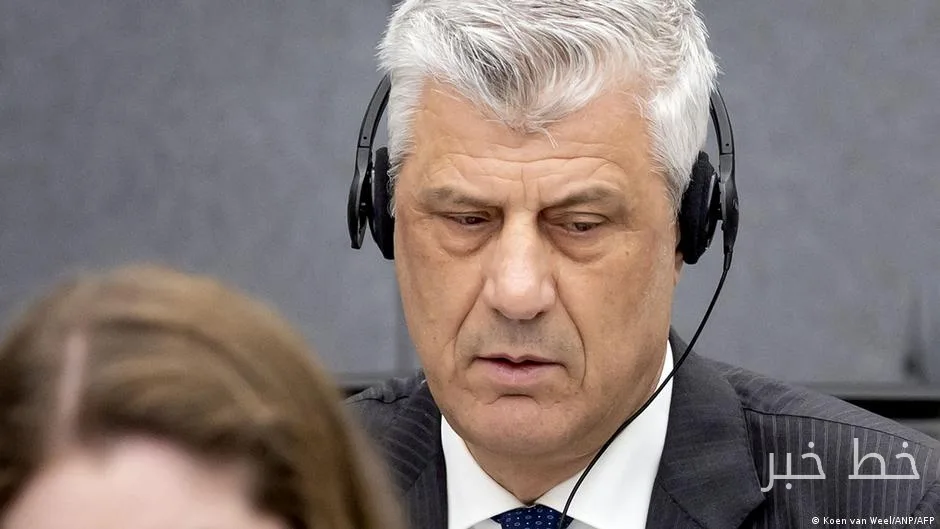
The President of Serbia, Aleksandar Vučić, criticized the ruling issued by the Kosovo war crimes court in The Hague at a press conference. The court sentenced four former leaders of the Kosovo Liberation Army (KLA) to a total of 81 years in prison for war crimes during the Kosovo War from 1998 to 1999.
Details of the Court's Ruling
The convicted leaders include Hashim Thaçi, Kadri Veseli, Rexhep Selimi, and Jakup Krasniqi. These four were convicted for the arbitrary detention of 385 individuals, mistreatment of 49 individuals, torture of 303 individuals, and murder of 96 individuals. However, they were acquitted of charges of crimes against humanity.
Read more: The Iranian government seizes the assets of Bahá'ís
Vučić emphasized in this conference that the Kosovo court, as part of the Kosovo judicial system, refrained from condemning these leaders for crimes against humanity, attributing this to a desire to avoid undermining the credibility of the KLA. He added: "This court did not address the realities concerning the formation of forces that aimed to separate Kosovo from Serbia and the Federal Republic of Yugoslavia."
Reactions to the Court's Ruling
Vučić also referred to the reactions of some countries to this ruling and, in response to the assessment of Kosovo Prime Minister Albin Kurti, who described it as an "unacceptable injustice," said: "If we were to express such an opinion about any accused or convicted person, several resolutions and statements would be issued against our people and country."
He pointed to the criticisms from European officials regarding the funeral of Ratko Mladić, the former Bosnian Serb commander convicted of war crimes, stating: "In every statement, Serbs must be recognized as the accused; while no Serb is considered a victim."
Meanwhile, Aleksandar Olenik, a Serbian lawyer working on war crimes cases, assessed the content of the ruling positively, stating that this ruling represents progress in international criminal law.
He also pointed out that under Kosovo law, only the founders of the KLA can be prosecuted in this court, and other members of this organization must be tried by Kosovo's domestic judiciary.
Setsa Zajevik, a human rights activist and member of the NGO "Women in Black," also noted that neither side involved in the war uses the rulings related to war crimes to examine their responsibilities and only exacerbates tensions.
Read more: Tom Homan announced ICE's lack of planning to inspect polling places · The conviction of Hashim Thaçi, former President of Kosovo, in The Hague