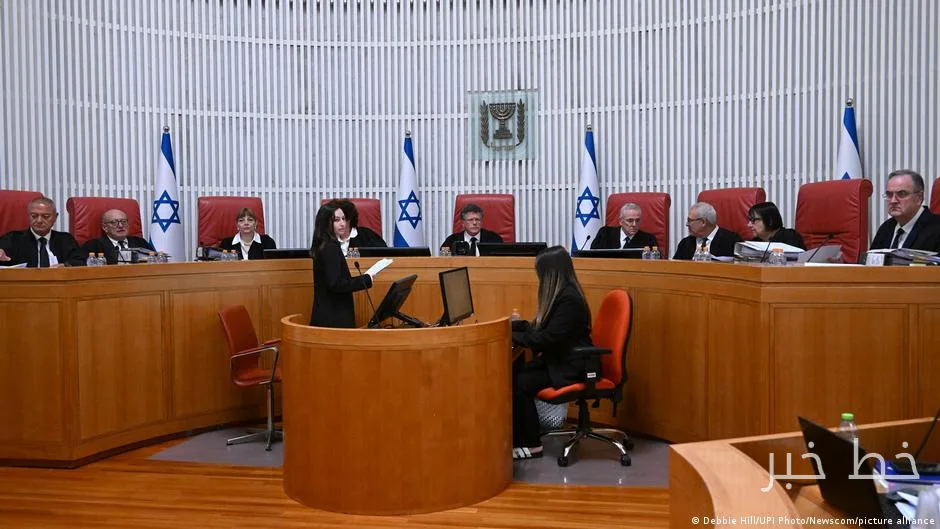
Israel's Supreme Court announced on Friday that four Arab parties are allowed to participate in the parliamentary elections of the country, which will be held at the end of this month. Arabs make up about one-fifth of Israel's population.
Cancellation of the Ban on Arab Parties
This decision overturns the Central Election Committee (CEC)'s action in late September to ban Arab parties. The committee had also attempted to disqualify several individual candidates from the competition.
Read more: British-Iranian Man Arrested in RAF Fairford Investigation
Status of Candidates and Controversial Statements
The Supreme Court also overturned the decision to disqualify Ofer Cassif, a representative of the Hadash party. However, Sami Abu Shahada, the leader of the Balad nationalist party, was informally advised to withdraw from the competition. The court informed him that it would uphold the CEC's ban on his candidacy.
Abu Shahada referred to the October 7, 2023, Hamas terrorist attack as "a significant historical event" in an article he wrote the day after the attack. This attack resulted in the deaths of approximately 1,200 people in Israel and the abduction of over 250 individuals.
According to sources, Abu Shahada expressed regret in the Supreme Court regarding his article and stated that he condemns the October 7 attack. He added, "The same election committee that disqualified me for this article has refused to disqualify all the far-right politicians who have serious cases against them."
Israel has repeatedly denied allegations of crimes against humanity in the Palestinian territories. The Central Election Committee is controlled by the coalition of Israeli Prime Minister Benjamin Netanyahu, which includes far-right and extremist parties.
According to the Israeli Knesset's constitutional law, candidates or parties can be disqualified from elections if they engage in "denying the existence of the State of Israel as a Jewish and democratic state" or "inciting racism." This law also prohibits those who support "armed struggle by a hostile country or a terrorist organization against the State of Israel."
Netanyahu's right-wing parties and his coalition partner, the Otzma Yehudit coalition, have made requests claiming that Arab parties or various candidates participate in the aforementioned actions and should be excluded from the elections.
However, the Central Election Committee has refrained from banning some controversial representatives, such as National Security Minister Itamar Ben Gvir and his Otzma Yehudit party. For example, in 2023, Ben Gvir claimed that Jewish rights take precedence over Palestinian rights in the West Bank, which led to international condemnation.
The decision of Israel's Supreme Court will have a significant impact on the upcoming parliamentary elections, as Netanyahu seeks to regain the prime ministership. Recent polls indicate that Netanyahu's Likud party is in a close race with Gadi Eisenkot, a former Israeli general leading the Yashar faction. However, it seems neither side will be able to secure enough votes alone to form a government, thus requiring coalition negotiations.
The conservative Ra'am party, led by Mansour Abbas, could play a key role in coalition negotiations after the voting.
Read more: Herzog Calls Britain's Sanctions a Serious Mistake and Accuses Them of Interfering in Israel's Elections · Benjamin Netanyahu: Israel Warns About Iran's Attack on Britain