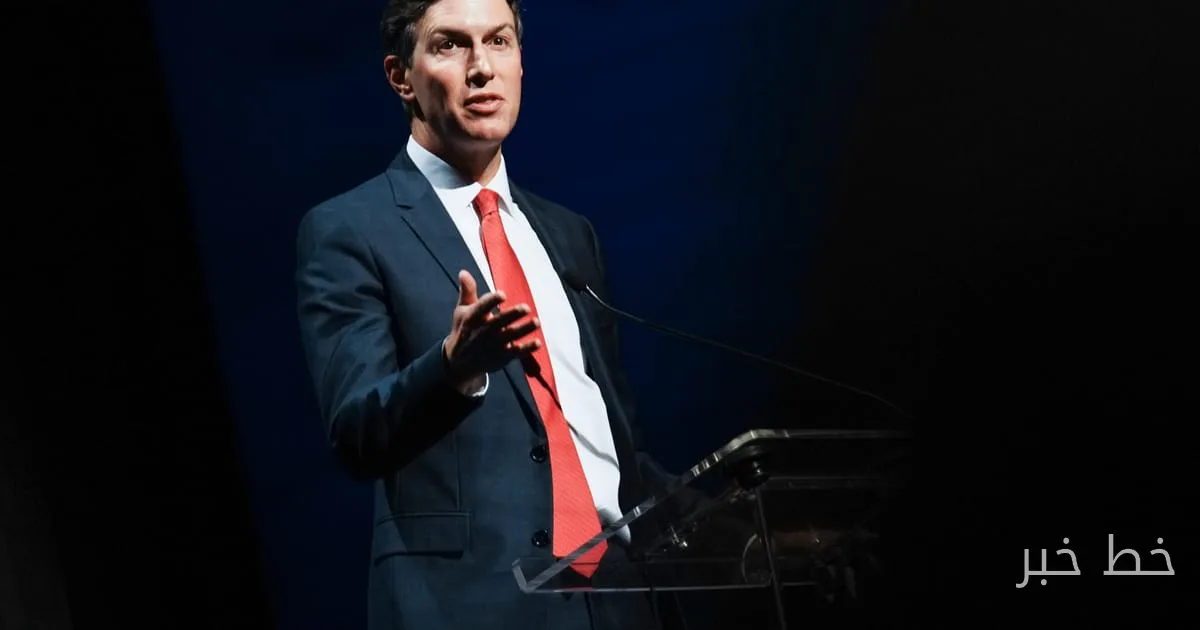
The new U.S. security plan presented by Jared Kushner has encountered skepticism and widespread criticism from European countries. European officials are worried that this plan could favor Russia and Vladimir Putin, the President of the country, and jeopardize Europe's security. These concerns arise as tensions in Ukraine continue.
Concerns About the New U.S. Plan
Kaja Kallas, the EU's foreign policy chief, reacted to this proposal by saying, "We already have a European security structure — NATO and the European Union each have their roles. We must ensure that Ukraine is included in this structure. The problem is that Russia continuously violates agreements that underpin this structure ... Putin does not have a veto over European security."
Read more: Meloni calls on the European Union to speak with one voice on Ukraine
The new U.S. plan, which reflects growing concerns about Donald Trump's renewed closeness to Russia, comes at a time when Trump has increased pressures on Ukraine and is attempting to revive negotiations that have been stalled for a long time.
Aims of Kushner's Security Plan
Jared Kushner, Trump's advisor, in support of this plan, stated that the agreement should include five objectives: permanent security consultations, reliable crisis communications, greater military transparency, reciprocal measures to reduce escalation risks, and a sustainable framework for long-term security and stability in Europe.
However, a NATO diplomat said, "The precise concept of Kushner is unclear. The general sentiment in Europe is that any discussion with Russia about the future of the security structure will currently only be exploited by Moscow to legitimize its arguments ... This will not be accepted among European allies."
European officials also pointed to NATO's lack of awareness of these plans, and many of them are skeptical about the idea.
Boryan Siebert, senior advisor to the President of the European Commission, said in a meeting with EU ambassadors, "While there is a willingness to engage in Kyiv and other parts of Europe, trust in the Russians is low — but the EU is not an obstacle to this."
He also stated, "The group around Trump has underestimated the significance of this conflict for Europe and that a bad outcome for Ukraine could be very dangerous."
The Necessity of Europe's Presence in Negotiations
This week, two rounds of working meetings were held in Brussels regarding the peace agreement for Ukraine, leading to working-level negotiations with Ukraine and Russia scheduled for November 10 and 11 in Abu Dhabi. Donald Tusk, the Prime Minister of Poland, said in an interview, "We must be realistic about peace negotiations and be very cautious about Russia's true intentions."
Some allies are concerned that the United States may link its new initiative to the upcoming review of American forces in Europe expected in December.
Read more: German Defense Minister rejects criticisms about prioritizing his country's military industry · Melania Trump hosts Russian and Ukrainian officials at the White House