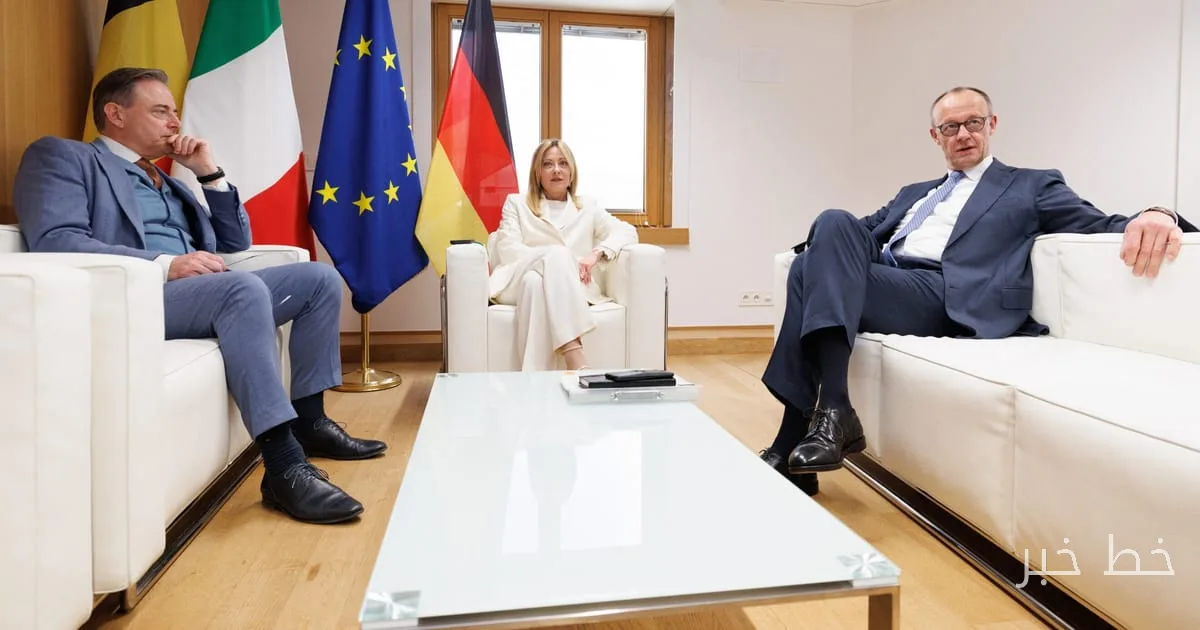
Leaders of Germany, Italy, and Belgium on Monday sent a letter to the President of the European Council, Antonio Costa, requesting the establishment of an "emergency brake" mechanism to halt new EU laws. This request has been made to help enhance the economic competitiveness of the bloc.
Need to Simplify Laws and Regulations
Olaf Scholz, Chancellor of Germany, Giorgia Meloni, Prime Minister of Italy, and Alexander De Croo, Prime Minister of Belgium, emphasized in the letter that member countries should be able to object to new laws if they impose a heavy burden on governments and businesses. They also called for significant acceleration in the planning and approval processes for laws and stressed the need to suspend certain regulatory areas for a specified period.
The leaders of these countries also urged the European Commission to reduce the regulatory burden, especially for small and medium-sized enterprises. They wrote in their letter: "We are calling for further simplification packages to decisively contribute to reducing bureaucracy in the EU."
Preventing the Decline of Europe's Industrial Capacity
The leaders of Germany, Italy, and Belgium also stated that their common goal should be to prevent unnecessary regulatory burdens and associated costs that could lead to a permanent loss of Europe's industrial capacity and further weaken investment and competitiveness. These requests were made two days before a meeting of EU leaders in Brussels.
The meeting of European leaders will include discussions on the EU's long-term budget, energy prices, and support for Ukraine. These requests have also been made in light of concerning signs of a worsening situation in the industrial sector of the bloc.
The leaders mentioned the negative impacts of new laws on economic competitiveness and emphasized that under these circumstances, the EU needs to seriously review and amend its regulations.