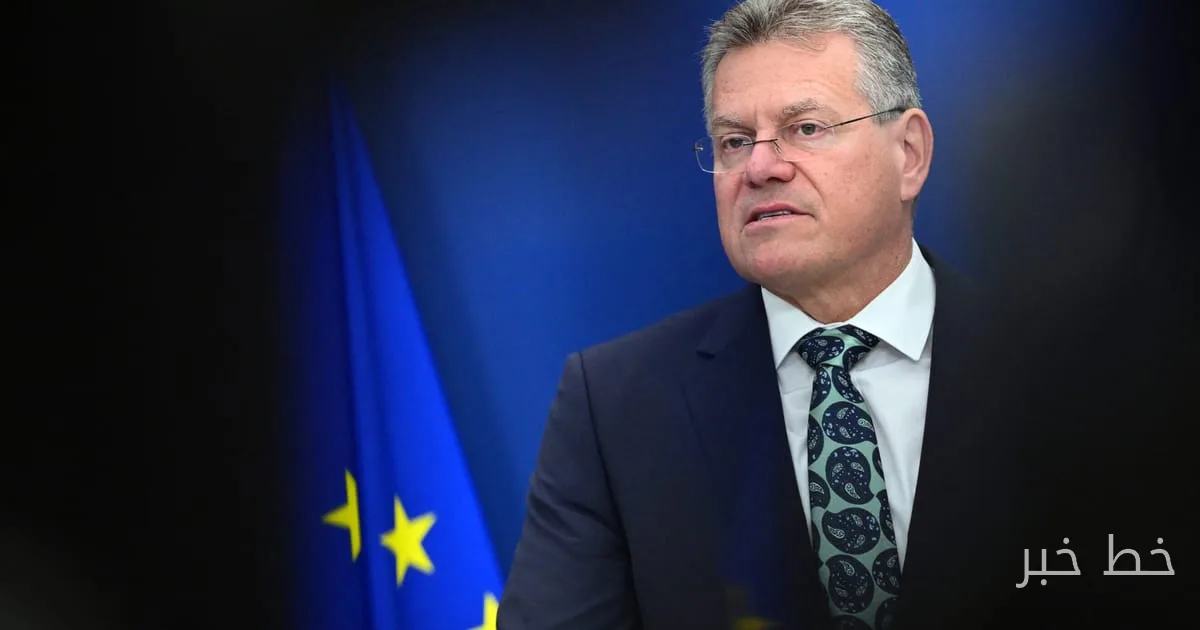
Maroš Šefčovič, the European Union's trade commissioner, announced that trade negotiations with China have not yet reached a definitive outcome. He stated at the sidelines of the G20 trade ministers' meeting in Milwaukee that the negotiations have been "constructive but difficult," reflecting the political interest and high expectations of the leaders of EU member states.
Challenges Ahead in Negotiations
Šefčovič said: "I feel that European leaders are very disappointed and impatient." He also mentioned his trip to Beijing on October 8 to meet with Wang Wentao, the Chinese Minister of Commerce, expressing hope that this trip would be fruitful. He added: "We must believe that we can reach a conclusion; otherwise, it is better not to travel at all."Read more: European countries have reached a coordinated response to US pressure on diesel
The results of this trip will be discussed at the EU leaders' summit on October 15 and 16 in Brussels. Šefčovič warned that if negotiations do not yield results, the EU may restrict access for Chinese companies to its domestic market.
Trade Status and Concerns
Negotiations between the EU and China began in June, and EU leaders have stated that they can no longer tolerate the high volume of Chinese imports and the significant trade deficit with China. Šefčovič believes that Chinese partners must understand that these issues have a direct impact on the future of large European companies and thousands of jobs. He emphasized the importance of this issue for the social structure and social model of Europe.At the center of these negotiations is the EU's trade deficit with China, which reaches one billion euros per day. To reduce this deficit, it is necessary to decrease imports from China or increase European exports to China.
Šefčovič hopes to bring back results from Beijing regarding three main issues: a sudden increase in Chinese exports in key industries, actions to boost European goods exports to China, and clarification regarding China's export restrictions on raw materials, especially rare materials.
In Milwaukee, Šefčovič met with Li Changgang, the Vice Minister of Commerce of China. He stated that China is attentive to Europe's concerns and added: "All the issues raised are on the table. I'm not saying we have guarantees for resolving them, but they are on the table."
In the past, some of these issues were difficult to place on the agenda. Now that this opportunity has arisen, Šefčovič sees it as a sign of the political importance of these negotiations for both sides.
The EU's negotiations with China are divided into four working areas: trade balance and investment, export controls, intellectual property, and reform of the World Trade Organization (WTO). According to a source close to the negotiations, the Commission is seeking an agreement with China that includes a mix of bilateral agreements for specific product groups and unilateral restrictions for other categories.