The elections in Mecklenburg-Vorpommern, Germany, will be held on Sunday, and the competition between the Social Democratic Party (SPD) and the far-right party (AfD) has become very close. Manuela Schwesig, the state’s prime minister, representing the Social Democratic Party, has high popularity in the polls, but she has also faced some criticisms.
Economic Situation in Mecklenburg-Vorpommern
Mecklenburg-Vorpommern, located in eastern Germany, has a relatively stable economic situation compared to other states. The unemployment rate in this state is 7.8%, which is slightly above the national average. The gross annual salary in this state reaches €47,750 (equivalent to $54,800), which is about €6,000 less than the German average. However, this state has witnessed significant economic growth in recent years.
Industry and Employment in Mecklenburg-Vorpommern
Agriculture plays an important role in this state, although employment in this sector is relatively low. Before the reunification of Germany, farms were large and state-managed, and the size of these farms has not changed much since then. On average, an agricultural company in Mecklenburg-Vorpommern owns about 280 to 283 hectares of land, while the national average is only about 65 hectares.
The shipbuilding and maritime services industry is another important sector in this state, accounting for a significant share of economic output. Due to its location on the shores of the Baltic Sea, Mecklenburg-Vorpommern has also benefited from recent investments in the defense sector, which have helped create jobs in large shipyards in Wismar and Stralsund.
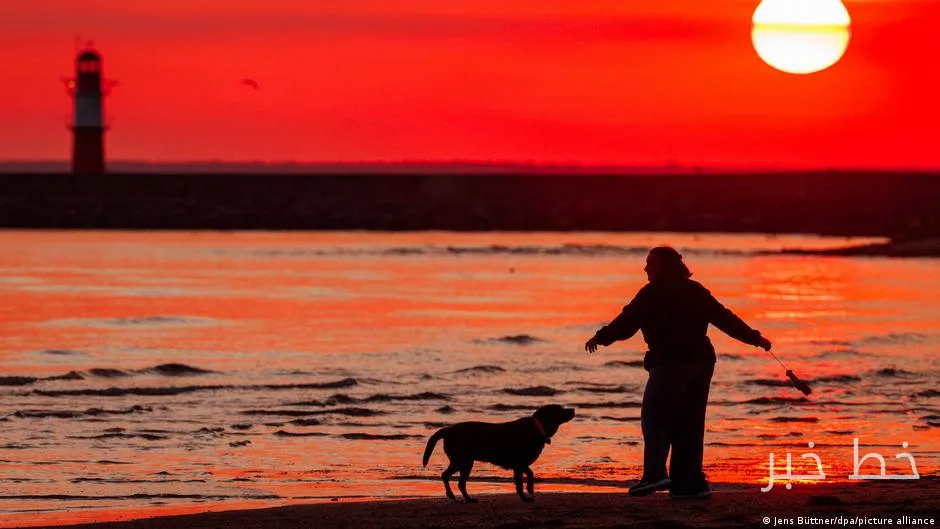
Tourism is also another key industry in this state. Until 1990, Mecklenburg-Vorpommern was one of the most important tourist destinations for East Germans, and after the fall of the Berlin Wall, tourists from both sides of the country flocked to the Baltic beaches. However, the number of direct employees in the tourism sector is relatively low, and most tourism jobs are seasonal.
According to statistics from the Ministry of Economy and industry reports, about 150,000 to 160,000 jobs are directly or indirectly dependent on tourism. Water tourism, whether in lakes or on the Baltic Sea shores, accounts for about 19,000 jobs.
Finally, the energy sector is also another key industry in this state. With large imports of fossil fuels into Germany via the Baltic Sea, this state plays an important role in energy supply. However, in 2022, following Russia's invasion of Ukraine, imports of Russian gas were halted, and the importance of the Nord Stream pipeline connections diminished. Nevertheless, a large portion of Germany's liquefied natural gas imports is still unloaded, processed, and distributed in Mecklenburg-Vorpommern.
This state is also developing renewable energy resources, such as wind and solar energy, as another important source for future energy supply. In August, the Schwarz Group, which operates the Lidl and Kaufland supermarket chains, announced an investment of €5.6 billion (equivalent to $6.4 billion) in building a data center in southern Rostock.