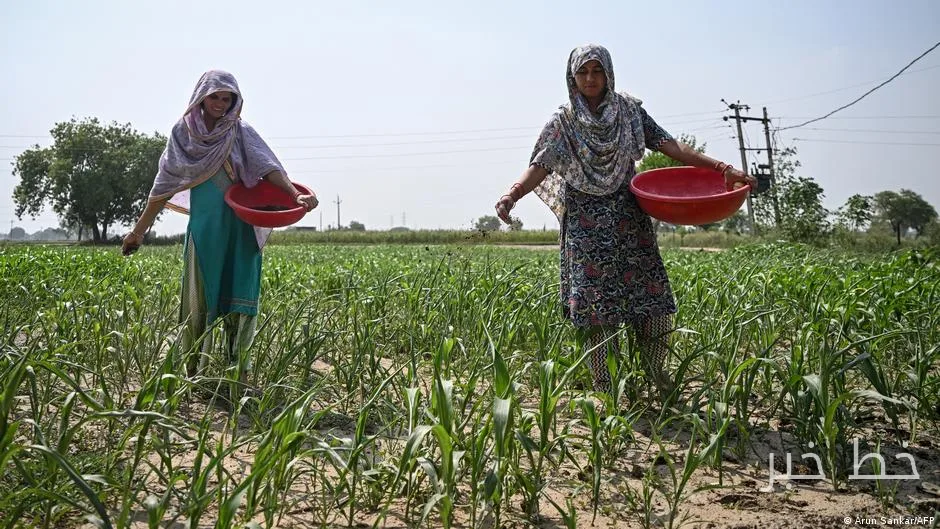
India is facing a water and electricity crisis caused by weak monsoon rains this year. Ramesh Reddy, a 44-year-old farmer from the Kolar region in Karnataka, had invested all his savings in a tomato farm. He invested 320,000 rupees (about 3,000 euros) and took out a loan to cover his expenses and those of his child, but the well he used for irrigation completely dried up, and he couldn't harvest even a single box of tomatoes.
Impact of Rainfall Shortage on Agriculture and Economy
The monsoon in India is not just a four-month rainy season; it also helps provide water for agriculture and electricity generation across the country. Nearly half of India's workforce is dependent on agriculture, and this rainfall shortage severely affects the income and employment of rural people.
This year, India received 759.4 millimeters of rain between June and September, which is 12.6 percent less than the long-term average of 868.6 millimeters. This situation is recognized as the driest monsoon in the last 11 years. Medhavan Nair Rajivaan, a climate scientist, has identified the main reason for this problem as the El Niño phenomenon, which affects rainfall.
Future Water and Electricity Shortages
This rainfall shortage has had serious impacts on India's water and energy systems. The country's large reservoirs experienced lower water levels than in previous years at the end of the monsoon. Overall storage in 178 reservoirs monitored by the Central Water Commission reached 132.7 billion cubic meters, which is below the 10-year average of 151.1 billion cubic meters.
This water shortage has harmed electricity production. Hydroelectric energy generation in September this year decreased by nearly 16 percent compared to last year, and the electricity shortage reached 560 million kilowatt-hours, the highest level in three years. Coal-fired power plants have been forced to increase their production, but they face serious challenges in securing fuel.
The economic impacts of this rainfall shortage could extend beyond agriculture. Reduced agricultural production may affect the income and consumption of rural people, and high food prices put additional pressure on household budgets.
Ultimately, farmers are preparing to plant winter crops such as wheat and chickpeas, but their success depends on the moisture available in the soil.