Nepal's Prime Minister, Balendra Shah, warned at the United Nations General Assembly (UNGA) about the catastrophic consequences of climate change. These remarks came less than a month after devastating floods affected his country. In his speech, Shah emphasized that Nepal, despite contributing less than 0.1 percent of global greenhouse gas emissions, pays a heavy price for the climate crisis.
Impacts of Climate Change on Nepal
Shah said in his UNGA speech: "I wish I could simply talk about development, democracy, peace, and the hopes of a young nation today. Instead, I am compelled to speak about death and massive destruction." Referring to recent natural disasters in Nepal, he highlighted the necessity of international cooperation to protect the Himalayas, stating: "The Himalayas are part of the Earth's life support system." Shah also proposed the establishment of a Himalayan Climate Resilience Mechanism, to be led by Nepal, India, and China. He called for the Himalayas to become a laboratory for international cooperation and urged countries around the world to commit to shared responsibility and solidarity.
Need for Aid-Based Financial Support
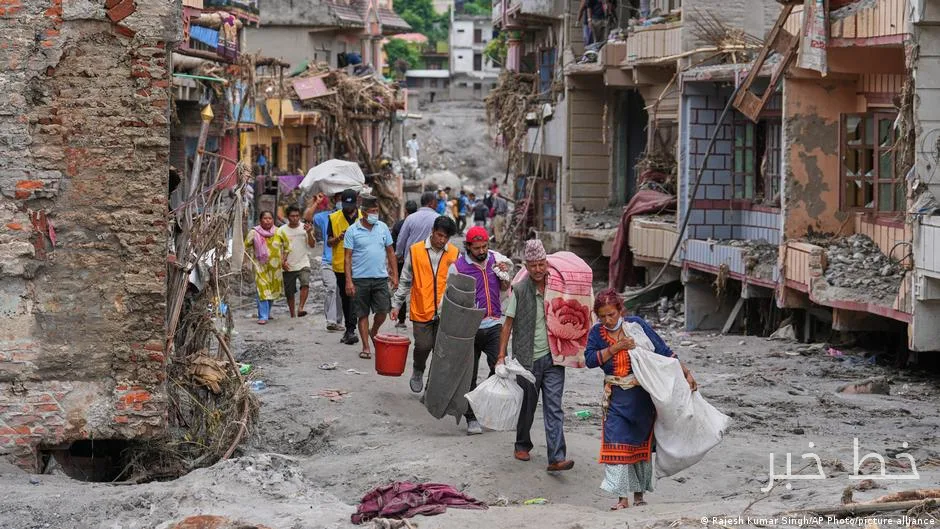
Nepal's Prime Minister pointed out that vulnerable countries should not be forced to bear additional debts for post-disaster recovery. He said: "When a climate disaster devastates the infrastructure of a poor country, the response cannot simply be a large loan or a series of small grants. We need adequate aid-based support from the world." The Prime Minister of Nepal also emphasized the principles of responsibility, compensation, and resilience, calling for financial support instead of loans. These remarks came in the wake of devastating floods in the country following glacier melt at the border of Nepal and the Tibet Autonomous Region of China, with estimates suggesting that over 6,000 people are still missing.
Horrific images of widespread destruction in Nepal quickly circulated around the world. Entire villages were destroyed, and people trapped in the tunnels of hydropower plants deep in the Himalayas were seen crawling towards rescuers, struggling to save their lives from mud and debris.
Read more: Children in Europe will face twice as many fire days in the future