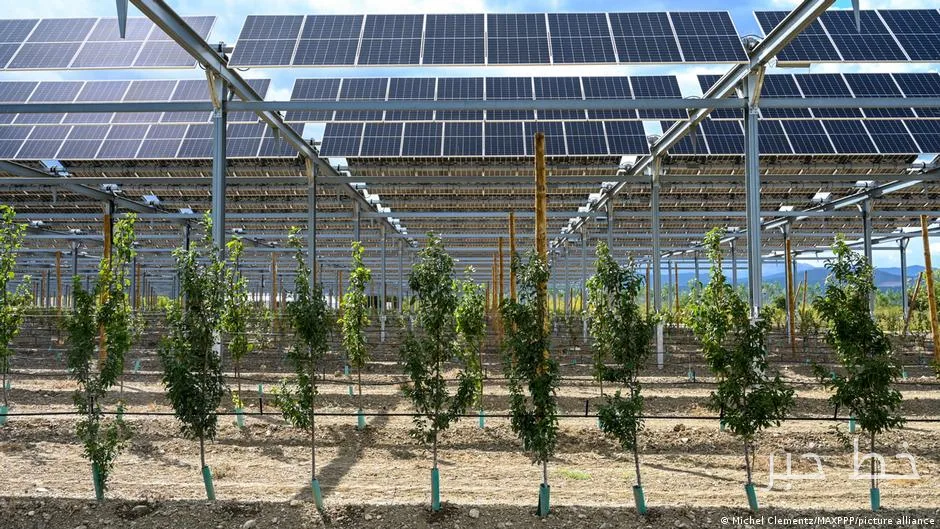
American farmers have achieved higher productivity by using solar panels and grazing sheep on farms. This method, known as agrivoltaics, allows farmers to grow their crops alongside renewable energy infrastructure and benefit from this coexistence.
Benefits of Agrivoltaics
Agrivoltaics allows livestock to graze in the shade of the panels while the panels can protect crops from weather factors. This method creates a more humid environment for crop growth, which can lead to increased production. Additionally, panels perform better in cooler conditions and produce more energy.
Read more: Voting for Fat Bear Week at Katmai National Park in Alaska is underway
Karl Bernacki, a professor of plant biology and crop sciences at the University of Illinois, emphasizes that using plants under the panels increases electricity production efficiency. This innovation benefits not only livestock and agricultural products but also provides farmers with new options to increase income.
Challenges and Opportunities
Although the potential of this method is very high, it is still in its early stages. In Europe, if only 1% of agricultural land is allocated to this method, it could achieve solar energy goals for 2030. However, only 18.4 gigawatts of global energy is allocated to this method by mid-2025.
There are various methods for agrivoltaics, including installing panels horizontally, vertically, and integrated with greenhouses. Research shows that crops like berries, grapes, and tomatoes thrive in these conditions. Additionally, sheep fit well into these systems due to their small size and easier management, reducing the need for herbicides.
Agrivoltaics is a new solution for combating climate change and can help farmers become more resilient to climate fluctuations. This method allows farmers to generate income from their products alongside energy production.
However, there are also challenges. In the dry regions of the western United States, panels can help retain moisture, but in wetter areas like the Midwest, the shade from the panels can lead to reduced crop production. It is important for farmers to be careful in selecting these systems.
Farmers can advance in this field by learning from the experiences of other farmers. This new method not only helps increase production and improve income but can also help reduce the negative effects of climate change.
Read more: Bolivia identifies the first new cat species in over a century · Artificial intelligence faces challenges in predicting hurricane storm intensity