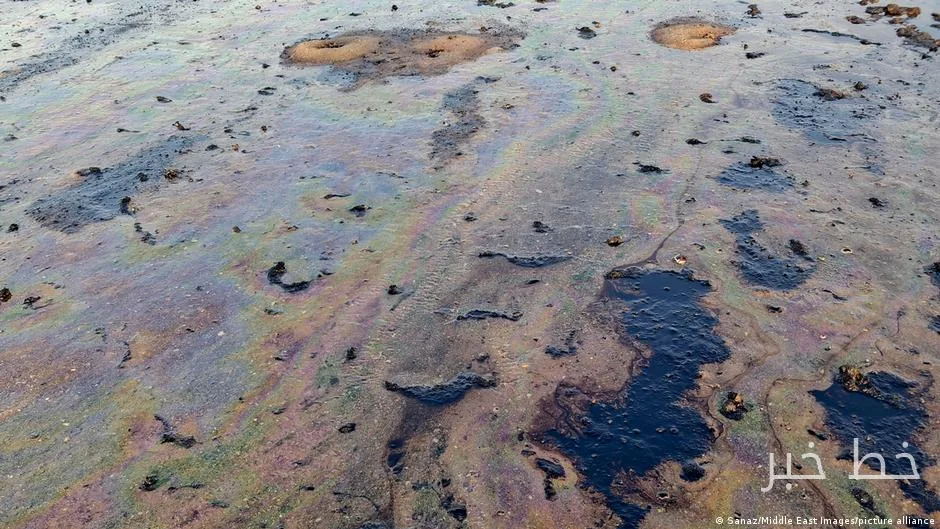
Oil spills from damaged tankers in the Strait of Hormuz are causing serious environmental damage to the Persian Gulf. These spills have increased due to missile attacks on tankers and military conflicts arising from the war between the United States and Iran.
Critical Situation in the Strait of Hormuz
Experts have identified signs of oil spills using satellite imagery. One recent example is an oil spill from a Russian tanker that ran aground off the coast of Oman in June with about 800,000 barrels of oil, resulting in a large spill. At the beginning of the war, the number of large oil tankers in the Strait of Hormuz reached 85, which has now decreased to 13. Each stranded tanker and any moving ship poses a risk of attack and oil spill.
Read more: Federal Court Overturns EPA Regulations on Toxic Chemical
Environmental Consequences
The international organization Greenpeace has described the situation as an 'environmental disaster' and identified five large oil slicks covering a total area of 240 square kilometers. These slicks harm sensitive and protected ecosystems. For example, one of these slicks has been identified near Musandam National Park in Oman, which is home to corals and seabirds.
Oil spills damage marine ecosystems and can have serious negative effects on marine life and coastal habitats in the coming years. However, weather conditions have caused these slicks to shrink, but experts say this does not mean that the environmental impacts have lessened.
Oil spills also pose a threat to coastal communities. Local communities depend on marine resources, and oil spills can negatively impact the food chain and drinking water supply. Many Gulf countries, especially Kuwait, Oman, and Saudi Arabia, rely on desalinated seawater, and oil spills can contaminate these resources.
Experts warn that war and instability in the region hinder rapid responses to these environmental crises. This situation highlights the need for immediate action to reduce dependence on fossil fuels to prevent the recurrence of such crises.
Read more: Growing Concerns Among Americans About the Environmental Impacts of Artificial Intelligence · Secretary of the Supreme National Security Council Confirms Closure of the Strait of Hormuz